
Top Attractions and Activities in Casablanca
As the principal international airport, Casablanca is the main entrance to Morocco and many tourists' first experience of the country. This busy metropolis is Morocco's economic and industrial powerhouse, with a contemporary swagger unmatched in the rest of the nation.
Needless to say, it cannot match with the history and tradition of Marrakesh and Fes, and most people either pass through or spend one night. Despite the fact that Casablanca's tourist attractions and things to do are limited, if you go a bit deeper, you will uncover some hidden treasures.
The new Hassan II Mosque is one of the city's top locations to visit, and a tour of the edifice is worth an overnight stay in town. Architecture enthusiasts should also spend some time in Casablanca's downtown quarter, which has several restored Mauresque facades. Casablanca is the best place to start your Morocco tour.
With this list of the top attractions and things to do in Casablanca, you can discover the greatest locations to visit in the city.
1. Go on a tour of the Hassan II Mosque.
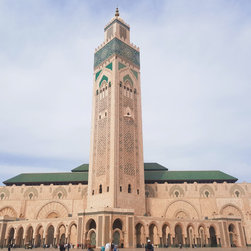
The Hassan II mosque overlooks the whole city from the seashore, just beyond the northern extremity of Casablanca's medina (old city). It was completed in 1993 and is the world's second biggest mosque, encompassing two hectares and including the world's highest tower (200 meters high).
The prayer hall can hold 25,000 attendees, while the courtyard (which has a retractable roof) can hold an additional 80,000.
Every centimeter of surface is covered with rich ornamentation. The setting, right on the point of the rocky bay above the ocean, is breathtaking.
Non-Muslims are welcome to visit the mosque on free guided tours provided by the mosque. The tours commence numerous times a day at the mosque's western gate.
Location: Casablanca Boulevard Sidi Mohammed ben Abdullah.
2. Take in the Architecture of Downtown Casablanca.
Place Mohamed V is Casablanca's primary square and home to several of the city's significant administrative buildings, including the main post office, Palace of Justice, Prefecture, French consulate, and Moroccan National Bank. This is a great place where to start the 3 days desert tour from Marrakech.
The building facades are entirely in the neo-Moorish (Mauresque) style that French Resident-General Lyautey envisioned for the city when he began upgrading Casablanca in the early twentieth century.
This type of architecture, which combines Art Deco and Art Nouveau with traditional Moroccan design, abounds in Casablanca's central sector between Place Mohamed V and Boulevard Mohamed V.
Take a walk along Rue Tahar Sabti and Boulevard Mohamed V in particular to see some of the finest maintained building facades.
3. Visit Casablanca's Medina.
Although Casablanca's medina (old city district) lacks the medieval feel of Fes and Marrakesh's medinas, the maze-like tumble of alleys is nonetheless an attractive spot to walk.
The medina here largely comes from the early nineteenth century, with the Sqala (the sea-facing defensive wall) being the first architectural works here, dating from the 18th century, when Portugal controlled this portion of the coast.
Because the neighborhood is a mix of market streets and residential areas, it's a perfect site to feel the pulse of Casablanca life.
In the medina's southern side, there are also several remarkable koubbas (shrines) devoted to local Muslim holy men.
4. Take in some sea air on the Corniche.
Head to the Hassan II Mosque for coastal vistas and fresh sea breezes close to downtown, and then wander the eastern end of Casablanca's Corniche road from there. From this vantage point, you may also take spectacular photos of the mosque jutting out into the Atlantic Ocean.
From here, the Corniche road runs west along Casablanca's coast, all the way to the city's coastal area of Ain Diab.
Ain Diab's beachfront is currently dominated by upscale hotels and restaurants. Because the public beach here isn't especially clean, the private beach clubs do a brisk business, with sunbathers soaking up the rays and splashing in the club swimming pools.
On warm weekends, Ain Diab's stretch of the Corniche is a popular site for people watching, with many local families picnicking and promenading here.
From downtown Casablanca, you may take a tram all the way to Ain Diab.
5. Pay a visit to Casablanca's Sacré Coeur Cathedral.
This elegant church was constructed in the 1930s, and its design is a beautiful combination of European and Moroccan styles.
Unfortunately, it has been allowed to wither over the last several decades and is now in desperate need of repair. Even in its present state of disrepair, the edifice is stunning.
Knock on the door, and if you're fortunate, the guardian will be there to let you in (for a tip) to view the cathedral's majestic interior. This place looks like the Tanzania safari 5 days.
The modernist-style Notre Dame de Lourdes (on Boulevard Mohamed Zerktouni) church, erected in the 1950s and lighted by a large stained-glass window, is well worth a visit in downtown Casablanca.
Needless to say, it cannot match with the history and tradition of Marrakesh and Fes, and most people either pass through or spend one night. Despite the fact that Casablanca's tourist attractions and things to do are limited, if you go a bit deeper, you will uncover some hidden treasures.
The new Hassan II Mosque is one of the city's top locations to visit, and a tour of the edifice is worth an overnight stay in town. Architecture enthusiasts should also spend some time in Casablanca's downtown quarter, which has several restored Mauresque facades. Casablanca is the best place to start your Morocco tour.
With this list of the top attractions and things to do in Casablanca, you can discover the greatest locations to visit in the city.
1. Go on a tour of the Hassan II Mosque.
The Hassan II mosque overlooks the whole city from the seashore, just beyond the northern extremity of Casablanca's medina (old city). It was completed in 1993 and is the world's second biggest mosque, encompassing two hectares and including the world's highest tower (200 meters high).
The prayer hall can hold 25,000 attendees, while the courtyard (which has a retractable roof) can hold an additional 80,000.
Every centimeter of surface is covered with rich ornamentation. The setting, right on the point of the rocky bay above the ocean, is breathtaking.
Non-Muslims are welcome to visit the mosque on free guided tours provided by the mosque. The tours commence numerous times a day at the mosque's western gate.
Location: Casablanca Boulevard Sidi Mohammed ben Abdullah.
2. Take in the Architecture of Downtown Casablanca.
Place Mohamed V is Casablanca's primary square and home to several of the city's significant administrative buildings, including the main post office, Palace of Justice, Prefecture, French consulate, and Moroccan National Bank. This is a great place where to start the 3 days desert tour from Marrakech.
The building facades are entirely in the neo-Moorish (Mauresque) style that French Resident-General Lyautey envisioned for the city when he began upgrading Casablanca in the early twentieth century.
This type of architecture, which combines Art Deco and Art Nouveau with traditional Moroccan design, abounds in Casablanca's central sector between Place Mohamed V and Boulevard Mohamed V.
Take a walk along Rue Tahar Sabti and Boulevard Mohamed V in particular to see some of the finest maintained building facades.
3. Visit Casablanca's Medina.
Although Casablanca's medina (old city district) lacks the medieval feel of Fes and Marrakesh's medinas, the maze-like tumble of alleys is nonetheless an attractive spot to walk.
The medina here largely comes from the early nineteenth century, with the Sqala (the sea-facing defensive wall) being the first architectural works here, dating from the 18th century, when Portugal controlled this portion of the coast.
Because the neighborhood is a mix of market streets and residential areas, it's a perfect site to feel the pulse of Casablanca life.
In the medina's southern side, there are also several remarkable koubbas (shrines) devoted to local Muslim holy men.
4. Take in some sea air on the Corniche.
Head to the Hassan II Mosque for coastal vistas and fresh sea breezes close to downtown, and then wander the eastern end of Casablanca's Corniche road from there. From this vantage point, you may also take spectacular photos of the mosque jutting out into the Atlantic Ocean.
From here, the Corniche road runs west along Casablanca's coast, all the way to the city's coastal area of Ain Diab.
Ain Diab's beachfront is currently dominated by upscale hotels and restaurants. Because the public beach here isn't especially clean, the private beach clubs do a brisk business, with sunbathers soaking up the rays and splashing in the club swimming pools.
On warm weekends, Ain Diab's stretch of the Corniche is a popular site for people watching, with many local families picnicking and promenading here.
From downtown Casablanca, you may take a tram all the way to Ain Diab.
5. Pay a visit to Casablanca's Sacré Coeur Cathedral.
This elegant church was constructed in the 1930s, and its design is a beautiful combination of European and Moroccan styles.
Unfortunately, it has been allowed to wither over the last several decades and is now in desperate need of repair. Even in its present state of disrepair, the edifice is stunning.
Knock on the door, and if you're fortunate, the guardian will be there to let you in (for a tip) to view the cathedral's majestic interior. This place looks like the Tanzania safari 5 days.
The modernist-style Notre Dame de Lourdes (on Boulevard Mohamed Zerktouni) church, erected in the 1950s and lighted by a large stained-glass window, is well worth a visit in downtown Casablanca.