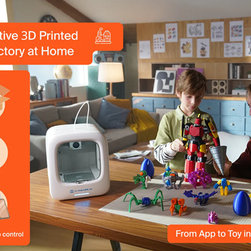

small 3d printed family projects kids can use
DIY Family Projects at Home: Small 3D Printed Ideas Kids Can Actually Use
The best first 3D printing projects for families are not the biggest or flashiest builds. They are small, useful objects that solve tiny home problems and give kids a real reason to feel proud.
Not every family DIY project needs to become a weekend renovation. Sometimes the most satisfying projects are small enough to finish in an afternoon and useful enough to keep using afterward.
For families with kids, that matters. A project that is too big can quickly become frustrating. One that is too messy can take over the kitchen table. One that takes too long can lose a child's attention before the best part happens. Small, practical 3D-printed projects sidestep all three problems. They give kids a way to make something real without requiring a huge setup, and they connect creativity with everyday home life — organizing a desk, labeling a drawer, marking plants, replacing a missing game token, decorating a room, or making a small gift.
The best first projects are not always the flashiest. They are the ones kids can finish, use, and feel proud of.
Why small projects work better for first-time family making
When families first try 3D printing, it is tempting to choose a big, impressive build. That can sound exciting, but it is rarely the best starting point. Small projects are easier to finish. They reduce frustration for both kids and parents. They make cleanup and setup more manageable. And they give kids a quick win.
A drawer label, plant marker, or game token may seem simple, but it teaches an important idea: something imagined on a screen can become something useful in the home. That early success helps children understand the design-to-use process. They choose an idea. They customize one detail. They make it. They use it.
The first win matters more than the first wow factor.
What makes a good family 3D printing project?
A good family project is not just printable. It is understandable, finishable, and useful after printing. Four simple rules:
Practical 3D printed ideas for around the home
The best family 3D printing ideas usually come from everyday home problems. Look around the house and ask: what small object would be useful, fun, or personal? Six categories tend to work especially well for beginner families.
Room labels and drawer tags
Labels are simple, useful, and easy for children to understand. Toy bins, craft drawers, bookshelves, backpack hooks, homeschool supplies, bedroom storage — all of these become more interesting when a child has personalized them. Seeing their own name or icon on a drawer can feel like ownership in a way an adult might not expect.
Desk organizers and pencil cups
A small organizer helps kids take responsibility for their own creative space. Pencil cups, marker holders, eraser trays, and small supply boxes stay on the desk after the activity is finished. They also make the child's workspace feel more personal, which encourages them to actually use it.
Plant markers for family gardening
Plant markers are one of the easiest ways to connect 3D printing with home and garden projects. Kids can help create labels for basil, mint, tomatoes, flowers, seedlings, indoor plants, or a classroom garden cup. The child prints the marker, places it in the soil, and watches the plant grow. It links making with observation — a natural pairing for any GardenWeb-minded household.
Board-game tokens and score markers
Family game night is another natural use case. Custom tokens, score markers, replacement pieces, dice trays, and simple game accessories let kids improve something the family already enjoys. The printed object becomes part of a shared activity rather than another item on a shelf.
Room decorations and small hooks
Simple decorations help kids personalize their own space. Wall name plates, small hooks, shelf decorations, door signs, headphone holders, and mini display stands give children a small but visible way to make their room feel like theirs. Keep these projects simple — the goal is not a redesign, just a small touch the child can point to.
Gift tags and keepsakes
Small gifts are some of the most meaningful beginner projects. A birthday tag, teacher gift, holiday ornament, small keychain, or family keepsake adds emotional value to the activity. The child is not only making an object — they are making something for someone.
How to keep the project low-mess and structured
Family DIY works best when cleanup is easy. A small project can still become chaotic if materials spread across the room or if no one knows where the finished pieces should go. A simple setup helps.
Try this basic structure:
- Choose one project at a time
- Use one tray or bin for current project items
- Keep tools and materials in a labeled container
- Set a simple time limit
- Decide where the finished object will go before starting
- Have a quick cleanup routine
A useful home setup might include one small table, one wipeable mat, one storage bin, one project card, and one display shelf or “finished projects” basket. The project card is especially helpful — it can list the object, the reason for making it, the child's customization choice, and where the finished item will live. A good project routine should be easy to reset. If cleanup takes too much effort, families are less likely to repeat it.
How guided tools help families avoid the “what should we make?” problem
Many families stall before the project even starts because they do not know what to print first. A guided app and a simple project library can help. Instead of beginning with a blank page, families can choose from age-appropriate ideas and customize from there.
A platform like AOSEED's family creativity ecosystem can help families move from “we should make something” to “we know what we're making today.” The value is not only the printer — it is the combination of guided design, project prompts, printable ideas, and support content.
Families looking for 3D printers for practical family projects can compare options that are designed around real home use rather than only technical hobbyist features.
For younger children, a starter toy-making 3D printer for younger creators can be a gentler entry point when paired with simple project prompts and parent-supported setup. The goal is not for the child to print something complicated on day one. It is to help the family start small and build confidence.
A simple weekend project format families can repeat
Once a family has the basics in place, the same simple workflow can carry many projects. Five short steps:
Example: messy desk → print a pencil holder → child adds their name → use it that afternoon → next weekend, print drawer labels for the rest of the desk.
What small project would your family print first?
The best family 3D printing ideas usually come from everyday home problems. Maybe your child needs a better way to organize markers. Maybe your garden needs plant labels for a few new herbs. Maybe a favorite board game is missing a piece. Maybe a bedroom shelf needs a small decoration, or grandparents would love a handmade gift tag.
QUESTIONS FOR YOUR FAMILY
• What small item would make your child's room easier to organize?
• What could help in your garden or plant shelf?
• What family game piece would be fun to customize?
• What small gift would your child enjoy making?
• What home project would be useful but simple enough for a beginner?
Start with one small project this weekend. See how your family uses it. Then let the next idea come from real life.
Useful projects help kids see making as part of home life
Family 3D printing does not need to begin with big builds. In many homes, the better starting point is a small, useful object a child can finish, personalize, and use right away. Room labels, plant markers, desk organizers, game tokens, decorations, and gifts may not sound dramatic, but they help children see that making belongs in everyday life.
That is the real value of small DIY family projects. A printed label can organize a drawer. A plant marker can support a gardening habit. A custom token can improve family game night. A small gift can make someone feel remembered. When children see their ideas becoming part of the household, the project feels real — and when a project feels real, they are more likely to ask the best question a young maker can ask: “What can we make next?”
Project Year: 2026
Project Cost: Less than USD 1,000