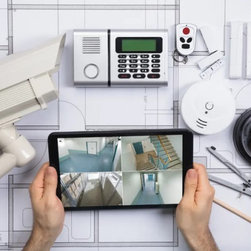
What Goes Into a Commercial Building Security System That Actually Works
Walk into most commercial buildings and the security setup looks simple enough: a few cameras, a card reader at the door, maybe a buzzer at the entrance. But the systems that genuinely protect a property, its people, and its assets are far more considered than the visible hardware suggests. The difference between a collection of devices and a security system that works comes down to how the whole thing is planned, integrated, and maintained over time.
For property owners, facility managers, and business operators, getting this right matters more than ever. A poorly designed system creates blind spots, frustrates tenants and staff, and often costs more in the long run because it has to be reworked. A well-designed one quietly does its job for years. Understanding what separates the two helps anyone responsible for a building make smarter decisions.
This article walks through what actually goes into an effective commercial security system, in practical terms.
Security Is a System, Not a Shopping List
The most common mistake in building security is treating it as a list of products to buy rather than a system to design. Cameras get added here, a card reader there, an alarm panel somewhere else, often at different times and by different vendors. The result is a patchwork that technically functions but never works as a coherent whole, leaving gaps that no single device is responsible for covering.
A real security system starts with the building and its risks, not with the catalog. It asks who needs access to what, where the vulnerable points are, what needs to be monitored, and how the pieces should talk to one another. Only then does specific hardware enter the picture. This is the difference between buying security and engineering it, and it is the reason two buildings with similar equipment can have wildly different levels of actual protection.
This systems thinking is exactly what experienced providers of security systems chicago businesses rely on to bring to a project. They look at the property as a whole rather than selling a box at a time. For an owner or manager, the practical takeaway is to resist the urge to assemble security piecemeal and instead think about how every element fits into a single, intentional design.
The Case for Designing, Not Just Installing
It is tempting to think of security as an installation job: pick the equipment, mount it, wire it up, done. But the installation is the easy part. The hard part, and the part that determines whether the system works, is the design that comes before it. A camera in the wrong place sees nothing useful. An access plan that ignores how people actually move through a building creates daily friction or dangerous workarounds.
Good design accounts for the realities of the specific property: its layout, its traffic patterns, its hours, its weak points, and the way its occupants behave. It anticipates problems before they are built into the walls. It also plans for how the components integrate, so that access control, video, alarms, and communication function as one system rather than several disconnected ones. This is why working with security design consultants early in a project tends to pay off, because the decisions made at the design stage are the ones that are most expensive to fix later.
The contrast is stark. A system that is designed first and installed second tends to do its job quietly for years. A system that is installed first and "designed" through trial and error tends to generate complaints, blind spots, and costly rework. For anyone investing in building security, the design phase is not an optional preliminary. It is where the value is created or lost.
Multifamily Properties Have Their Own Challenges
Securing an apartment community is a different problem from securing an office or a warehouse, and treating them the same is a recipe for trouble. Multifamily properties combine private residences, shared common areas, parking, amenities, and a constant flow of residents, guests, deliveries, and service workers. The system has to protect people and property without making residents feel like they live in a fortress.
The challenges are specific. Entry points are numerous and used around the clock. Residents expect convenient access for themselves and their guests while still feeling safe. Package theft, unauthorized entry to common areas, and parking security are recurring concerns. And turnover means the system has to make granting and revoking access simple and reliable. These demands are why multifamily security systems are designed differently from those in other commercial settings, with a heavy emphasis on access control, intercom and entry systems, and coverage of shared spaces.
Getting multifamily security right has real benefits beyond safety. It supports resident satisfaction and retention, protects the owner from liability, and can be a genuine selling point in a competitive rental market. The key is recognizing that an apartment community's needs are distinct, and designing for them specifically rather than adapting a generic commercial template that was never meant for a residential environment.
The Layers That Make a System Whole
Effective building security is built in layers, each handling a different part of the job and reinforcing the others. Understanding these layers helps clarify what a complete system actually includes, beyond the cameras most people picture first.
Access control governs who can enter which spaces and when, replacing easily copied keys with credentials that can be managed, tracked, and revoked instantly. Video surveillance provides visibility and a record, both deterring problems and helping resolve them when they occur. Intercom and entry communication systems manage visitors and deliveries, especially important at controlled entrances. Alarm and detection systems flag intrusions and other events that need a response. And increasingly, these elements integrate so that they work together, an access event can trigger a camera, an alarm can pull up live video, and managers can oversee everything from a single interface.
The power of this layered approach is that no single failure leaves the building exposed, and the layers multiply each other's value. A camera is more useful when tied to access records. An alarm is more useful when it summons relevant video. Designing these layers to work as a unified system, rather than installing them in isolation, is what turns a set of devices into genuine protection.
Planning for Growth, Change, and Upkeep
A security system is not a one-time purchase but a long-term asset, and the best ones are designed with the future in mind. Buildings change. Tenants come and go, uses evolve, and security needs shift over time. A system that cannot adapt becomes obsolete quickly, forcing expensive replacement instead of straightforward expansion.
Designing for the long term means choosing systems that can scale and adapt, so adding cameras, doors, or capabilities later does not require starting over. It means thinking about how the system will be managed day to day, since a powerful system that is too cumbersome to operate will not be used well. And it means planning for maintenance and support, because security hardware needs upkeep, and a system that is neglected slowly degrades into one that only appears to be protecting the building.
This long-term view is part of what separates a thoughtful security investment from a short-sighted one. The goal is not just a system that works on installation day but one that keeps working, adapts as the property changes, and remains reliable for years. For owners and managers, asking how a proposed system will grow and be maintained is just as important as asking what it does on day one.
The Mistakes That Quietly Undermine Building Security
Even well-intentioned security investments go wrong in predictable ways, and knowing the common pitfalls helps owners and managers avoid them. Most failures trace back to a handful of avoidable mistakes rather than to bad equipment.
The first is treating security as an afterthought, something addressed late in a building project or bolted on only once a problem has already occurred. Decisions made under that kind of pressure are rarely the best ones, and retrofitting a system into a building that was never planned for it almost always costs more than designing it in from the start. The second is choosing on price alone. The cheapest bid often reflects a cheaper design, lower-quality components, or a narrower scope, and the apparent savings tend to evaporate once gaps and rework appear. The third is ignoring integration, buying capable individual pieces that never function as a coordinated whole, which leaves exactly the blind spots a security system is supposed to eliminate.
A fourth common mistake is neglecting the human side. A system that is too complicated for staff to operate, or that generates so many false alerts that people stop paying attention, fails no matter how sophisticated it looks on paper. And a fifth is forgetting about maintenance entirely, treating the system as finished on installation day and then letting it quietly degrade until it is protecting the building far less than anyone realizes.
The thread running through all of these is short-term thinking. Building security rewards a longer view, one that accounts for design, integration, usability, and upkeep from the beginning. Owners and managers who recognize these pitfalls, and plan deliberately to avoid them, end up with systems that genuinely protect their properties rather than ones that merely create the appearance of security.
Bringing It All Together
A commercial building security system that actually works is never just a pile of equipment. It is a designed, integrated, maintained system that reflects the specific property, its risks, and its people. The visible cameras and card readers are only the surface. The real protection comes from the planning underneath, the way the layers work together, and the foresight to keep the system effective over time.
For anyone responsible for a building, the practical lesson is to start with design, think in systems rather than products, account for the specific type of property, and plan for the long term. A security system built that way does something deceptively simple: it protects what matters, quietly and reliably, without becoming a daily headache. Anyone weighing an investment in building security is well served by partnering with people who approach it as the engineering challenge it genuinely is.
For property owners, facility managers, and business operators, getting this right matters more than ever. A poorly designed system creates blind spots, frustrates tenants and staff, and often costs more in the long run because it has to be reworked. A well-designed one quietly does its job for years. Understanding what separates the two helps anyone responsible for a building make smarter decisions.
This article walks through what actually goes into an effective commercial security system, in practical terms.
Security Is a System, Not a Shopping List
The most common mistake in building security is treating it as a list of products to buy rather than a system to design. Cameras get added here, a card reader there, an alarm panel somewhere else, often at different times and by different vendors. The result is a patchwork that technically functions but never works as a coherent whole, leaving gaps that no single device is responsible for covering.
A real security system starts with the building and its risks, not with the catalog. It asks who needs access to what, where the vulnerable points are, what needs to be monitored, and how the pieces should talk to one another. Only then does specific hardware enter the picture. This is the difference between buying security and engineering it, and it is the reason two buildings with similar equipment can have wildly different levels of actual protection.
This systems thinking is exactly what experienced providers of security systems chicago businesses rely on to bring to a project. They look at the property as a whole rather than selling a box at a time. For an owner or manager, the practical takeaway is to resist the urge to assemble security piecemeal and instead think about how every element fits into a single, intentional design.
The Case for Designing, Not Just Installing
It is tempting to think of security as an installation job: pick the equipment, mount it, wire it up, done. But the installation is the easy part. The hard part, and the part that determines whether the system works, is the design that comes before it. A camera in the wrong place sees nothing useful. An access plan that ignores how people actually move through a building creates daily friction or dangerous workarounds.
Good design accounts for the realities of the specific property: its layout, its traffic patterns, its hours, its weak points, and the way its occupants behave. It anticipates problems before they are built into the walls. It also plans for how the components integrate, so that access control, video, alarms, and communication function as one system rather than several disconnected ones. This is why working with security design consultants early in a project tends to pay off, because the decisions made at the design stage are the ones that are most expensive to fix later.
The contrast is stark. A system that is designed first and installed second tends to do its job quietly for years. A system that is installed first and "designed" through trial and error tends to generate complaints, blind spots, and costly rework. For anyone investing in building security, the design phase is not an optional preliminary. It is where the value is created or lost.
Multifamily Properties Have Their Own Challenges
Securing an apartment community is a different problem from securing an office or a warehouse, and treating them the same is a recipe for trouble. Multifamily properties combine private residences, shared common areas, parking, amenities, and a constant flow of residents, guests, deliveries, and service workers. The system has to protect people and property without making residents feel like they live in a fortress.
The challenges are specific. Entry points are numerous and used around the clock. Residents expect convenient access for themselves and their guests while still feeling safe. Package theft, unauthorized entry to common areas, and parking security are recurring concerns. And turnover means the system has to make granting and revoking access simple and reliable. These demands are why multifamily security systems are designed differently from those in other commercial settings, with a heavy emphasis on access control, intercom and entry systems, and coverage of shared spaces.
Getting multifamily security right has real benefits beyond safety. It supports resident satisfaction and retention, protects the owner from liability, and can be a genuine selling point in a competitive rental market. The key is recognizing that an apartment community's needs are distinct, and designing for them specifically rather than adapting a generic commercial template that was never meant for a residential environment.
The Layers That Make a System Whole
Effective building security is built in layers, each handling a different part of the job and reinforcing the others. Understanding these layers helps clarify what a complete system actually includes, beyond the cameras most people picture first.
Access control governs who can enter which spaces and when, replacing easily copied keys with credentials that can be managed, tracked, and revoked instantly. Video surveillance provides visibility and a record, both deterring problems and helping resolve them when they occur. Intercom and entry communication systems manage visitors and deliveries, especially important at controlled entrances. Alarm and detection systems flag intrusions and other events that need a response. And increasingly, these elements integrate so that they work together, an access event can trigger a camera, an alarm can pull up live video, and managers can oversee everything from a single interface.
The power of this layered approach is that no single failure leaves the building exposed, and the layers multiply each other's value. A camera is more useful when tied to access records. An alarm is more useful when it summons relevant video. Designing these layers to work as a unified system, rather than installing them in isolation, is what turns a set of devices into genuine protection.
Planning for Growth, Change, and Upkeep
A security system is not a one-time purchase but a long-term asset, and the best ones are designed with the future in mind. Buildings change. Tenants come and go, uses evolve, and security needs shift over time. A system that cannot adapt becomes obsolete quickly, forcing expensive replacement instead of straightforward expansion.
Designing for the long term means choosing systems that can scale and adapt, so adding cameras, doors, or capabilities later does not require starting over. It means thinking about how the system will be managed day to day, since a powerful system that is too cumbersome to operate will not be used well. And it means planning for maintenance and support, because security hardware needs upkeep, and a system that is neglected slowly degrades into one that only appears to be protecting the building.
This long-term view is part of what separates a thoughtful security investment from a short-sighted one. The goal is not just a system that works on installation day but one that keeps working, adapts as the property changes, and remains reliable for years. For owners and managers, asking how a proposed system will grow and be maintained is just as important as asking what it does on day one.
The Mistakes That Quietly Undermine Building Security
Even well-intentioned security investments go wrong in predictable ways, and knowing the common pitfalls helps owners and managers avoid them. Most failures trace back to a handful of avoidable mistakes rather than to bad equipment.
The first is treating security as an afterthought, something addressed late in a building project or bolted on only once a problem has already occurred. Decisions made under that kind of pressure are rarely the best ones, and retrofitting a system into a building that was never planned for it almost always costs more than designing it in from the start. The second is choosing on price alone. The cheapest bid often reflects a cheaper design, lower-quality components, or a narrower scope, and the apparent savings tend to evaporate once gaps and rework appear. The third is ignoring integration, buying capable individual pieces that never function as a coordinated whole, which leaves exactly the blind spots a security system is supposed to eliminate.
A fourth common mistake is neglecting the human side. A system that is too complicated for staff to operate, or that generates so many false alerts that people stop paying attention, fails no matter how sophisticated it looks on paper. And a fifth is forgetting about maintenance entirely, treating the system as finished on installation day and then letting it quietly degrade until it is protecting the building far less than anyone realizes.
The thread running through all of these is short-term thinking. Building security rewards a longer view, one that accounts for design, integration, usability, and upkeep from the beginning. Owners and managers who recognize these pitfalls, and plan deliberately to avoid them, end up with systems that genuinely protect their properties rather than ones that merely create the appearance of security.
Bringing It All Together
A commercial building security system that actually works is never just a pile of equipment. It is a designed, integrated, maintained system that reflects the specific property, its risks, and its people. The visible cameras and card readers are only the surface. The real protection comes from the planning underneath, the way the layers work together, and the foresight to keep the system effective over time.
For anyone responsible for a building, the practical lesson is to start with design, think in systems rather than products, account for the specific type of property, and plan for the long term. A security system built that way does something deceptively simple: it protects what matters, quietly and reliably, without becoming a daily headache. Anyone weighing an investment in building security is well served by partnering with people who approach it as the engineering challenge it genuinely is.
Project Year: 2026
Project Cost: USD 1,50,001 - USD 2,00,000