

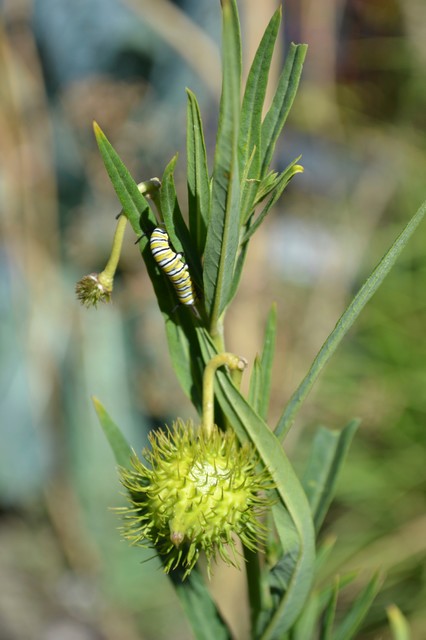

Asclepia- Milk Weed w. Monarch Caterpillar-Pollinator Planting
Asclepia Milk Weed- habitat plant for Monarch Butterflies. Caterpillar visible above developing seed pod.
Girasole Sonoma
Girasole Sonoma
What Houzzers are commenting on:

dyhaigler added this to Landscape Two
Without food for the young, there would be no butterflies, moths or bees. Here, a monarch caterpillar enjoys milkweed (Asclepias sp.).
4. Pollinators Need More Than Just Flowers
Without foliage to eat, many youngsters and future butterflies, moths, flies and beetles would starve. The same can be said about pollen, which a lot of native bee species use to feed their young. Shallow flowers like asters and sunflowers tend to attract a greater diversity of adult pollinators, but that doesn’t mean you should stick to that one form.
Additionally, try to use straight species where you can. These are native plants that have not been crossed or bred with others to produce new leaf colors or new flower colors and shapes. When plants are altered, the chemical makeup of their leaves may change and be unable to support as many caterpillars.
Julie Schroder added this to Plants
Without food for the young, there would be no butterflies, moths or bees. Here, a monarch caterpillar enjoys milkweed (Asclepias sp.).4. Pollinators need more than just flowers. Without foliage to eat, many youngsters and future butterflies, moths, flies and beetles would starve. The same can be said about pollen, which a lot of native bee species use to feed their young. Shallow flowers like asters and sunflowers tend to attract a greater diversity of adult pollinators, but that doesn’t mean you should stick to that one form.Additionally, try to use straight species where you can. These are native plants that have not been crossed or bred with others to produce new leaf colors or new flower colors and shapes. When plants are altered, the chemical makeup of their leaves may change and be unable to support as many caterpillars.

Leslie Calambro added this to Native Garden Design
Pollinators need more than just flowers. Without foliage to eat, many youngsters and future butterflies, moths, flies and beetles would starve. The same can be said about pollen, which a lot of native bee species use to feed their young. Shallow flowers like asters and sunflowers tend to attract a greater diversity of adult pollinators, but that doesn’t mean you should stick to that one form.
Additionally, try to use straight species where you can. These are native plants that have not been crossed or bred with others to produce new leaf colors or new flower colors and shapes. When plants are altered, the chemical makeup of their leaves may change and be unable to support as many caterpillars.


