Mill Dowrie, Steading Conversion, Scottish Borders
When a derelict mill and farm steading on the family farm in Gordon in the Scottish Borders came into Bruce’s Brown’s ownership, their agricultural usefulness had long since been superseded. The properties dated from the 18th and 19th centuries and the slates had been removed from the roofs in the 60s and 70s leaving the timbers to rot and the structural wooden door and window lintels were gradually succumbing to the elements.
In response to a complaint by a passing walker regarding the safety of the general public, part of the roadside masonry had to be demolished. Hence, Bruce affectionately referred to the collection as his “rotfolio” of properties. “I didn’t regard selling as an option as they have always been in the family; you can only sell things once! However, I saw the potential to develop the property to provide some income for my retirement or for the next downturn in the oil industry, which is an occupational hazard in my line of work.”
The family has been associated with the farm for almost 150 years and Bruce’s brother, Alistair, is the fourth generation of the same family to farm there. Originally part of the Mellerstain Estate, Byrewalls and Midmill were rented by their great-grandfather Andrew Shiell in 1870. In the early 1920s, his only son, Rutherford Shiell, managed to buy both farms for around £12,000. On his untimely death in 1943, his elder daughter May who was only 20, took over the running of the 558 acres. “It was quite a challenge for a young girl, but she ran the farm passionately for almost all her life.”
Starting with what he thought would be the easiest, Bruce decided to refurbish his late aunt’s home which was originally built by Rutherford Shiell in 1924 for his widowed mother. Bruce basically wanted to bring it into the 21st century with central heating, double glazing, an integral garage and conservatory. Whilst working rotationally in the oil industry in Angola, Bruce entrusted a local architect to supervise the work which soon went badly wrong and doubled in cost.
When it came to converting the steading, Bruce was taking no risks this time and employed Bob Brand an architectural technician, who had worked on Bruce and his wife, Catriona’s, own home in Aberdeenshire. “Bob had previously designed a refurbishment and extension on our own property. I wanted him to survey the steading and, for future consideration, the old corn mill (one further wall of which had recently collapsed). Bob is very experienced in the conversion of stone steadings and he hand-draughted the most accurate plans. It probably took over a year to fully specify and plan the project and address all the regulatory hurdles to gain the necessary consents.”
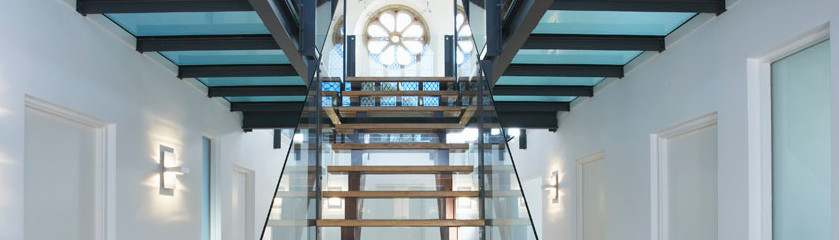
The aim of the project was to create a generously proportioned self-catering property but the design actually evolved due to circumstances as Bruce explains: “The east facing back wall had no windows in it and to design a house that took advantage of the extensive views would have meant so much destruction of the stonework, we decided to take it all away and extend the property from that point. I wanted to rebuild in traditional stonework until Bob showed me some other properties he had designed and I’m so glad we chose to incorporate a glass gable; in the morning the sunlight just fills the living spaces.
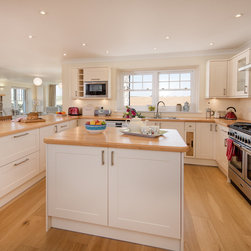
“I was still working 4 weeks on/4 weeks off in Angola and confined to a camp surrounded by a 15ft razor wire fence and minefield. Outside work, I was free to think how I wanted to lay out the property and exchanged regular emails with Bob back in Aberdeenshire.“ Bruce also designed the kitchen whilst he was abroad. “I used a software package to shuffle cookers and dishwashers around the available space. In fact, the kitchen ended up in the south corner by fate. It didn’t work in the gable end because of the window and it was going to be a separate room until my wife stepped in and said it would be much better as open plan and she was (as always!) right.”
Due diligence was also applied in contracting a suitable builder. Bruce expanded and extended Bob’s already comprehensive construction notes to produce a definitive scope of work and basis for tender. “Too often, items or services supplied are overlooked at the tender stage, resulting in unwelcome surprises (and “sucking of air”) for the builder or (more likely) the client later on.
“I put it out to tender to five reputable building companies and in the end we awarded the work to MEH Builders and Joiners from Galashiels. Working with Malcolm (Horsburgh) was so easy especially with my time away, he just got on with it. It was a complete breath of fresh air to work with such a professional bloke committed to delivering a quality job. He would also often proffer superior materials and fittings for comparable prices.”
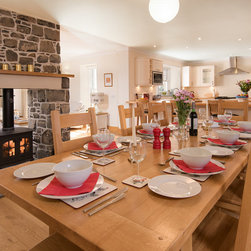
The conversion was completed in 2014 resulting in a spacious four bedroom, two storey cottage. “Whilst I was still extremely busy on my overseas assignment, leave periods became more R & R and Catriona and I were able to ponder in selecting furniture and fabrics. We would occasionally see something and think that’s quite nice – ‘it would go well in Mill Dowrie’. As a result, the furnishing of the cottage was almost a leisurely affair. We didn’t have any surplus furniture that we could commit so it’s all been new but bought over time. We didn’t really want to offer a holiday let that had eight different dining room chairs – that’s not really our style.”
The focal point in the cottage is the double sided wood burning stove which was inspired from a trip to Austria. “I find a room in winter totally lifeless unless you have a fire and I like how the Austrians often have chimney breasts in the middle of the house. As well as absorbing heat from the stove, it subsequently dissipates the heat once the fire has died. The dressed stonework for the chimney breast came from the dilapidating corn mill just down the road. I might regret taking it should I come to subsequently tackle that project!
“I’m really pleased with the end result although actually it was only in May this year when I had to give up working overseas that I thought I better get on and finally finish Mill Dowrie. However, now I think I could even go as far to say that I now have more of a portfolio than a rotfolio!”
In response to a complaint by a passing walker regarding the safety of the general public, part of the roadside masonry had to be demolished. Hence, Bruce affectionately referred to the collection as his “rotfolio” of properties. “I didn’t regard selling as an option as they have always been in the family; you can only sell things once! However, I saw the potential to develop the property to provide some income for my retirement or for the next downturn in the oil industry, which is an occupational hazard in my line of work.”
The family has been associated with the farm for almost 150 years and Bruce’s brother, Alistair, is the fourth generation of the same family to farm there. Originally part of the Mellerstain Estate, Byrewalls and Midmill were rented by their great-grandfather Andrew Shiell in 1870. In the early 1920s, his only son, Rutherford Shiell, managed to buy both farms for around £12,000. On his untimely death in 1943, his elder daughter May who was only 20, took over the running of the 558 acres. “It was quite a challenge for a young girl, but she ran the farm passionately for almost all her life.”
Starting with what he thought would be the easiest, Bruce decided to refurbish his late aunt’s home which was originally built by Rutherford Shiell in 1924 for his widowed mother. Bruce basically wanted to bring it into the 21st century with central heating, double glazing, an integral garage and conservatory. Whilst working rotationally in the oil industry in Angola, Bruce entrusted a local architect to supervise the work which soon went badly wrong and doubled in cost.
When it came to converting the steading, Bruce was taking no risks this time and employed Bob Brand an architectural technician, who had worked on Bruce and his wife, Catriona’s, own home in Aberdeenshire. “Bob had previously designed a refurbishment and extension on our own property. I wanted him to survey the steading and, for future consideration, the old corn mill (one further wall of which had recently collapsed). Bob is very experienced in the conversion of stone steadings and he hand-draughted the most accurate plans. It probably took over a year to fully specify and plan the project and address all the regulatory hurdles to gain the necessary consents.”
The aim of the project was to create a generously proportioned self-catering property but the design actually evolved due to circumstances as Bruce explains: “The east facing back wall had no windows in it and to design a house that took advantage of the extensive views would have meant so much destruction of the stonework, we decided to take it all away and extend the property from that point. I wanted to rebuild in traditional stonework until Bob showed me some other properties he had designed and I’m so glad we chose to incorporate a glass gable; in the morning the sunlight just fills the living spaces.
“I was still working 4 weeks on/4 weeks off in Angola and confined to a camp surrounded by a 15ft razor wire fence and minefield. Outside work, I was free to think how I wanted to lay out the property and exchanged regular emails with Bob back in Aberdeenshire.“ Bruce also designed the kitchen whilst he was abroad. “I used a software package to shuffle cookers and dishwashers around the available space. In fact, the kitchen ended up in the south corner by fate. It didn’t work in the gable end because of the window and it was going to be a separate room until my wife stepped in and said it would be much better as open plan and she was (as always!) right.”
Due diligence was also applied in contracting a suitable builder. Bruce expanded and extended Bob’s already comprehensive construction notes to produce a definitive scope of work and basis for tender. “Too often, items or services supplied are overlooked at the tender stage, resulting in unwelcome surprises (and “sucking of air”) for the builder or (more likely) the client later on.
“I put it out to tender to five reputable building companies and in the end we awarded the work to MEH Builders and Joiners from Galashiels. Working with Malcolm (Horsburgh) was so easy especially with my time away, he just got on with it. It was a complete breath of fresh air to work with such a professional bloke committed to delivering a quality job. He would also often proffer superior materials and fittings for comparable prices.”
The conversion was completed in 2014 resulting in a spacious four bedroom, two storey cottage. “Whilst I was still extremely busy on my overseas assignment, leave periods became more R & R and Catriona and I were able to ponder in selecting furniture and fabrics. We would occasionally see something and think that’s quite nice – ‘it would go well in Mill Dowrie’. As a result, the furnishing of the cottage was almost a leisurely affair. We didn’t have any surplus furniture that we could commit so it’s all been new but bought over time. We didn’t really want to offer a holiday let that had eight different dining room chairs – that’s not really our style.”
The focal point in the cottage is the double sided wood burning stove which was inspired from a trip to Austria. “I find a room in winter totally lifeless unless you have a fire and I like how the Austrians often have chimney breasts in the middle of the house. As well as absorbing heat from the stove, it subsequently dissipates the heat once the fire has died. The dressed stonework for the chimney breast came from the dilapidating corn mill just down the road. I might regret taking it should I come to subsequently tackle that project!
“I’m really pleased with the end result although actually it was only in May this year when I had to give up working overseas that I thought I better get on and finally finish Mill Dowrie. However, now I think I could even go as far to say that I now have more of a portfolio than a rotfolio!”