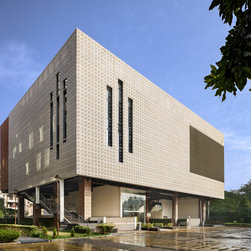
The Exhibition Centre, New Delhi
In the ever-evolving patterns of city spaces and urban life, the spatial landscape is transforming at a rapid pace. As cities grow, smaller spaces expand while traditional urban areas dwindle, challenging the essence of communal spaces in the public realm. In the dynamic atmosphere of New Delhi, The Exhibition Centre emerges as a beacon, redefining the concept of public spaces.
Central Delhi's East Kidwai Nagar was on the cusp of Smart City recognition; originally conceived as a mixed-use smart city plan in 2019, East Kidwai Nagar aimed to address New Delhi's chronic housing shortage. In collaboration with the Ministry of Urban Housing and Affairs (MoUHA) and facilitated through NBCC, the masterplanning, design, and implementation responsibilities of The Exhibition Center were delegated to STHAPATI. Under the vision of STHAPATI, the upcoming exhibition center is more than just a physical space—it represents sustainable solutions for a changing world. With a focus on leaving a lasting impact on both communities and the environment, their approach aligns with the evolving needs of modern urban living.
Urban Challenges And The Evolution Of Public Spaces
The global phenomenon of rapid urbanization has led to a paradox where smaller spaces flourish, and urban areas seemingly diminish. In an era where societal interaction and communal existence are cherished, the need for innovative design becomes paramount. Redefining the use of public spaces and extending them into an urban interior realm, the East Kidwai Nagar Exhibition Centre takes center stage.
Part of the East Kidwai Nagar redevelopment initiative by the Ministry of Urban Housing and Affairs, this groundbreaking project seeks to create a public community space reminiscent of an urban center. Strategically positioned along the main ring road connecting major hubs in New Delhi, the site boasts high visibility and proximity to the bustling South Extension commercial center, famed for lifestyle shopping.
Planning and Design Excellence: Transparency and Porosity for Visual Intergeneration
Since the surrounding urban fabric is a very dense settlement, the three-storey structure’s surreal elevation design elevates the building. The novel design ensures porosity, and a visual connection across the two sides of The Exhibition Centre, making it a sure-shot conversation starter in the gentrifying neighborhood.
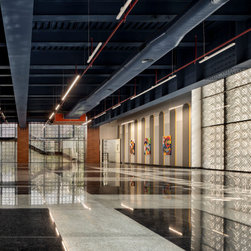
Despite its airy appearance, the site plan was initially very restrictive regarding boundaries. Thus, the architectural intent has been not to make The Exhibition Centre’s guests feel claustrophobic. The end-to-end large column-free spaces ensure just that whilst adding spatial depth to the compact space
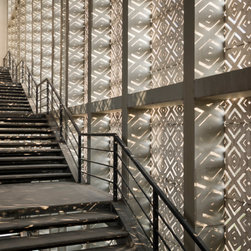
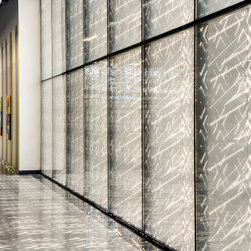
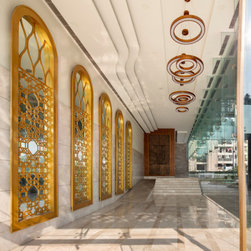
The meticulous planning approach extends to the ground floor entrance lobbies, featuring transparent glass walls to enhance visibility and porosity. The ingenious use of screened fenestrations allows soft patterns of light and shadow on the floor throughout the day. It provides a captivating view of the bustling ring road, seamlessly connecting the interior with the external urban fabric.
Sustainable and Prefabricated Construction: A Model for the Future
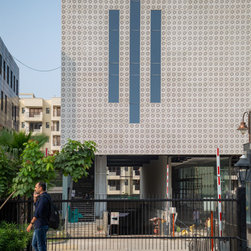
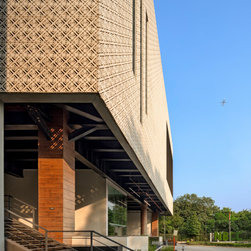
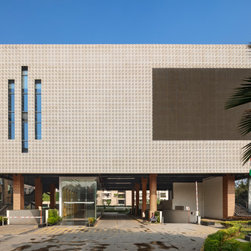
Acknowledging the dense settlement surrounding the site, the design concept is for the design to 'lift' the building, allowing for ground-level use as a covered public space, basking in natural light and ventilation while extending into the surrounding urban fabric. This design choice ensures porosity and visual connectivity and positions The Exhibition Centre as a landmark in the heart of New Delhi.
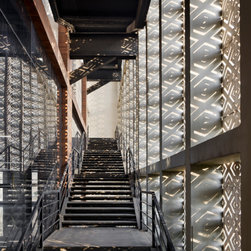
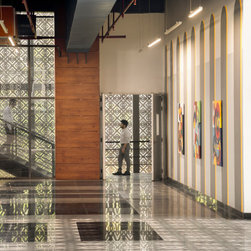
The project's commitment to sustainability is evident in its prefabricated construction, significantly reducing on-site pollution and waste generation. The use of vibrant shades on exposed steel structures inside the exhibition space celebrates the building's structure and contributes to a vibrant, cheerful atmosphere that stimulates community interactions.
A Symphony of Steel and Space
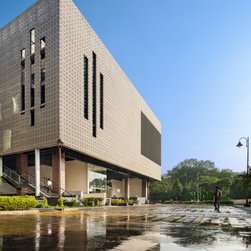
The Exhibition Centre is a three-story structure, defying conventions with its complete steel framework, featuring expansive spans of unsupported column-free spaces reaching 35 meters. Its innovative design addresses spatial constraints and creates a covered public space at ground level, maximizing usability for the residents of East Kidwai Nagar.
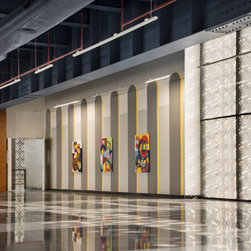
Upon entering the grand double-height lobby, visitors are greeted with lifts guiding them to Level 1, dedicated to exhibition spaces, and Level 2, a community center fostering social interactions.
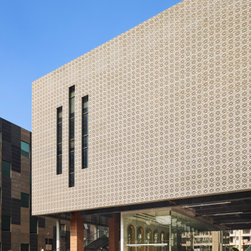
Indian summers are hot, but Delhi’s temperatures can soar unbearably during the season. The design executed the futuristic build’s intricate, latticed GRC Jali façade inspired by a character typical to Lutyens Delhi. The facade transcends being merely a mode GRC screen. It seamlessly integrates an expansive LED screen, transforming the building into a dynamic canvas that comes alive, marrying function and aesthetics for a captivating urban experience while pulling in the crowds.
The Changing Dynamics Of Urban Life Burgeoning Phenomenon
To coordinate all aspects of a high-profile event, The Exhibition Centre’s unmatched services come with a depth of expertise and unmatched commitment to service, which includes: multi-cuisine eateries at the entry level to showcase the subcontinent’s gastronomy, modular, collapsible and reconfigurable exhibition spaces to stretch retail goals; ample community spaces with panoramic views on the upper decks; and duly screened jali work awnings on the terrace to allow alfresco events.
Acknowledging the increasing importance of indoor spaces, particularly public interiors, in shaping and mirroring the changing dynamics of cities, the design for The Exhibition Centre is a public space designed with inclusivity in mind, challenging the conventional notions of public and private and creating a unique 'public realm.' In a world where people spend more time indoors due to health concerns and climate impacts, The Exhibition Centre demands a rethink of design priorities. The Exhibition Centre emphasizes the crucial role of interior design in addressing broader issues of urbanism, livability, and equity in public indoor spaces.
A Paradigm Shift in Urbanism
The East Kidwai Nagar Exhibition Centre is not merely a building but a transformative intervention in the urban landscape. Born out of a collaboration between the Ministry of Urban Housing and Affairs and NBCC, this architectural marvel exemplifies the power of built public spaces to create dynamic, inclusive, and environmentally conscious environments that anticipate the future needs of urban dwellers.
The project serves as a rallying point for a paradigm shift in how we approach urban design. The Exhibition Centre stands as a testament to the potential of public buildings to shape and reflect the changing dynamics of urban life, emphasizing the importance of inclusive design practices for a more sustainable and equitable future.
Central Delhi's East Kidwai Nagar was on the cusp of Smart City recognition; originally conceived as a mixed-use smart city plan in 2019, East Kidwai Nagar aimed to address New Delhi's chronic housing shortage. In collaboration with the Ministry of Urban Housing and Affairs (MoUHA) and facilitated through NBCC, the masterplanning, design, and implementation responsibilities of The Exhibition Center were delegated to STHAPATI. Under the vision of STHAPATI, the upcoming exhibition center is more than just a physical space—it represents sustainable solutions for a changing world. With a focus on leaving a lasting impact on both communities and the environment, their approach aligns with the evolving needs of modern urban living.
Urban Challenges And The Evolution Of Public Spaces
The global phenomenon of rapid urbanization has led to a paradox where smaller spaces flourish, and urban areas seemingly diminish. In an era where societal interaction and communal existence are cherished, the need for innovative design becomes paramount. Redefining the use of public spaces and extending them into an urban interior realm, the East Kidwai Nagar Exhibition Centre takes center stage.
Part of the East Kidwai Nagar redevelopment initiative by the Ministry of Urban Housing and Affairs, this groundbreaking project seeks to create a public community space reminiscent of an urban center. Strategically positioned along the main ring road connecting major hubs in New Delhi, the site boasts high visibility and proximity to the bustling South Extension commercial center, famed for lifestyle shopping.
Planning and Design Excellence: Transparency and Porosity for Visual Intergeneration
Since the surrounding urban fabric is a very dense settlement, the three-storey structure’s surreal elevation design elevates the building. The novel design ensures porosity, and a visual connection across the two sides of The Exhibition Centre, making it a sure-shot conversation starter in the gentrifying neighborhood.
Despite its airy appearance, the site plan was initially very restrictive regarding boundaries. Thus, the architectural intent has been not to make The Exhibition Centre’s guests feel claustrophobic. The end-to-end large column-free spaces ensure just that whilst adding spatial depth to the compact space
The meticulous planning approach extends to the ground floor entrance lobbies, featuring transparent glass walls to enhance visibility and porosity. The ingenious use of screened fenestrations allows soft patterns of light and shadow on the floor throughout the day. It provides a captivating view of the bustling ring road, seamlessly connecting the interior with the external urban fabric.
Sustainable and Prefabricated Construction: A Model for the Future
Acknowledging the dense settlement surrounding the site, the design concept is for the design to 'lift' the building, allowing for ground-level use as a covered public space, basking in natural light and ventilation while extending into the surrounding urban fabric. This design choice ensures porosity and visual connectivity and positions The Exhibition Centre as a landmark in the heart of New Delhi.
The project's commitment to sustainability is evident in its prefabricated construction, significantly reducing on-site pollution and waste generation. The use of vibrant shades on exposed steel structures inside the exhibition space celebrates the building's structure and contributes to a vibrant, cheerful atmosphere that stimulates community interactions.
A Symphony of Steel and Space
The Exhibition Centre is a three-story structure, defying conventions with its complete steel framework, featuring expansive spans of unsupported column-free spaces reaching 35 meters. Its innovative design addresses spatial constraints and creates a covered public space at ground level, maximizing usability for the residents of East Kidwai Nagar.
Upon entering the grand double-height lobby, visitors are greeted with lifts guiding them to Level 1, dedicated to exhibition spaces, and Level 2, a community center fostering social interactions.
Indian summers are hot, but Delhi’s temperatures can soar unbearably during the season. The design executed the futuristic build’s intricate, latticed GRC Jali façade inspired by a character typical to Lutyens Delhi. The facade transcends being merely a mode GRC screen. It seamlessly integrates an expansive LED screen, transforming the building into a dynamic canvas that comes alive, marrying function and aesthetics for a captivating urban experience while pulling in the crowds.
The Changing Dynamics Of Urban Life Burgeoning Phenomenon
To coordinate all aspects of a high-profile event, The Exhibition Centre’s unmatched services come with a depth of expertise and unmatched commitment to service, which includes: multi-cuisine eateries at the entry level to showcase the subcontinent’s gastronomy, modular, collapsible and reconfigurable exhibition spaces to stretch retail goals; ample community spaces with panoramic views on the upper decks; and duly screened jali work awnings on the terrace to allow alfresco events.
Acknowledging the increasing importance of indoor spaces, particularly public interiors, in shaping and mirroring the changing dynamics of cities, the design for The Exhibition Centre is a public space designed with inclusivity in mind, challenging the conventional notions of public and private and creating a unique 'public realm.' In a world where people spend more time indoors due to health concerns and climate impacts, The Exhibition Centre demands a rethink of design priorities. The Exhibition Centre emphasizes the crucial role of interior design in addressing broader issues of urbanism, livability, and equity in public indoor spaces.
A Paradigm Shift in Urbanism
The East Kidwai Nagar Exhibition Centre is not merely a building but a transformative intervention in the urban landscape. Born out of a collaboration between the Ministry of Urban Housing and Affairs and NBCC, this architectural marvel exemplifies the power of built public spaces to create dynamic, inclusive, and environmentally conscious environments that anticipate the future needs of urban dwellers.
The project serves as a rallying point for a paradigm shift in how we approach urban design. The Exhibition Centre stands as a testament to the potential of public buildings to shape and reflect the changing dynamics of urban life, emphasizing the importance of inclusive design practices for a more sustainable and equitable future.
Project Year: 2019
Country: India