Carpet as Architecture: Embroidered Veneer Wardrobe Surface
Project Overview
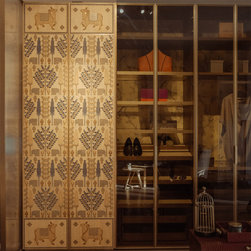
When Gulzoe was invited to collaborate on a wardrobe display for a Delhi-based wardrobe manufacturer, the objective was not simply to decorate cabinetry. The challenge was to explore how surface could become architecture—allowing storage planes to hold visual and tactile presence within an interior.
Several surface directions were initially explored: printed veneer, hand-painted wallpaper, and textile panels. Each approach offered decorative potential, but the question remained unresolved:
How can ornament become structural rather than applied?
The final solution emerged through an unconventional material translation—hand embroidery integrated directly into architectural veneer.
The result is a wardrobe surface where Persian carpet grammar moves from textile into timber.
The Idea: Translating Carpet Grammar into Wood
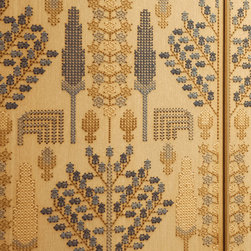
Traditional Persian carpets organise space through rhythm, borders, and repeated motifs. Rather than reproducing a carpet pattern as decoration, Gulzoe translated this compositional logic into the language of veneer.
Here, embroidery behaves like incision.
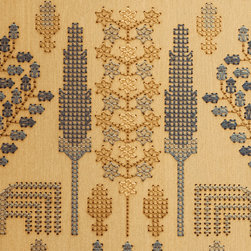
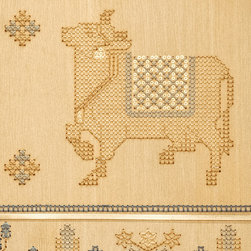
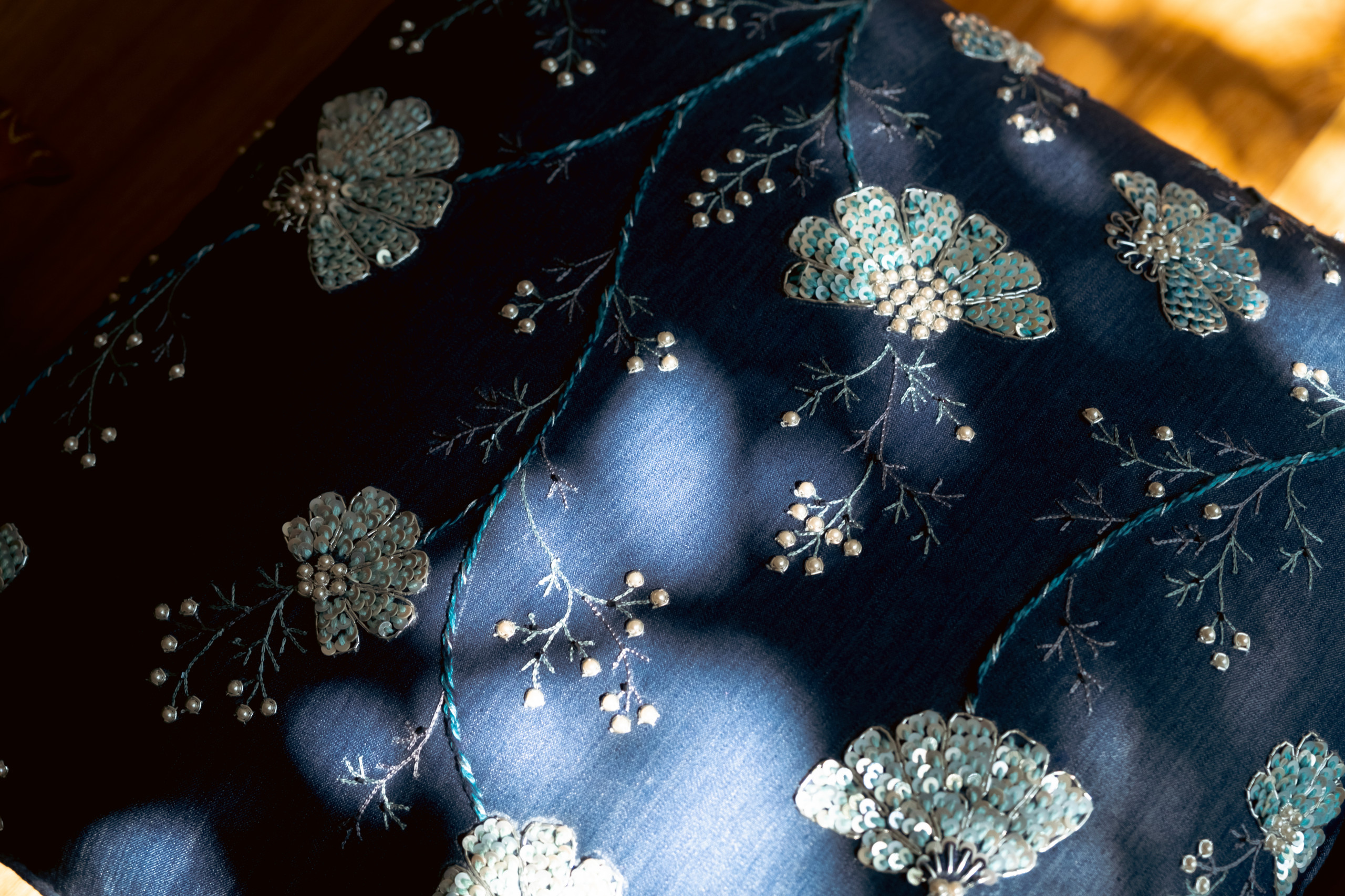
Threads enter the wood surface, creating relief, rhythm, and calibrated interruption. The veneer becomes the ground plane, while the embroidered line introduces depth without visual heaviness.
This approach allows cabinetry—often treated as a functional background element—to carry the presence of an architectural tapestry.
Material Innovation: Embroidered Veneer
The surface was constructed using architectural-grade White Oak veneer panels prepared to receive hand embroidery.
Using anchor threads and restrained sequin articulation, the embroidered pattern was carefully integrated into the veneer surface. Each stitch required precise anchoring and tension control to ensure long-term stability within joinery applications.
The embroidery introduces tactile relief that shifts subtly under changing light conditions, revealing the craft only upon proximity.
From a distance, the wardrobe reads as a composed architectural surface. Up close, the material intelligence becomes visible.
Spatial Behaviour
Across the full-height wardrobe shutters, the embroidered composition stabilizes the vertical field of the cabinetry.
The veneer substrate provides tonal warmth and structural grounding, while the embroidery introduces rhythm and subtle interruption. This duality allows the surface to hold visual interest without overwhelming the surrounding architecture.
The intervention demonstrates how joinery surfaces can move beyond neutrality to become active contributors to spatial composition.
Process
Developing the surface required extensive calibration between material behaviour and structural constraints.
Key considerations included:
Veneer stability during embroidery
Thread anchoring techniques within the timber substrate
Long-term durability within cabinet shutters
Maintaining surface alignment across vertical panels
The entire surface development and embroidery process required approximately 680 hours of handwork.
Applications & Design Potential
While first developed for wardrobe shutters, embroidered veneer surfaces can extend into several architectural applications:
Veneered wall panels
Pivot doors
Luxury cabinetry fronts
Framed surface panels
Hospitality feature walls
By embedding ornament within the material itself rather than layering it on top, the surface achieves both visual restraint and tactile richness.
The Studio
Gulzoe is a commission-led surface studio exploring how craft can operate within contemporary interiors.
Through investigations in embroidery, veneer, textiles, and mixed materials, the studio develops surfaces that integrate spatial intelligence with material precision.
Rather than treating surfaces as decorative layers, Gulzoe approaches them as architectural systems capable of shaping atmosphere, scale, and perception.
When Gulzoe was invited to collaborate on a wardrobe display for a Delhi-based wardrobe manufacturer, the objective was not simply to decorate cabinetry. The challenge was to explore how surface could become architecture—allowing storage planes to hold visual and tactile presence within an interior.
Several surface directions were initially explored: printed veneer, hand-painted wallpaper, and textile panels. Each approach offered decorative potential, but the question remained unresolved:
How can ornament become structural rather than applied?
The final solution emerged through an unconventional material translation—hand embroidery integrated directly into architectural veneer.
The result is a wardrobe surface where Persian carpet grammar moves from textile into timber.
The Idea: Translating Carpet Grammar into Wood
Traditional Persian carpets organise space through rhythm, borders, and repeated motifs. Rather than reproducing a carpet pattern as decoration, Gulzoe translated this compositional logic into the language of veneer.
Here, embroidery behaves like incision.
Threads enter the wood surface, creating relief, rhythm, and calibrated interruption. The veneer becomes the ground plane, while the embroidered line introduces depth without visual heaviness.
This approach allows cabinetry—often treated as a functional background element—to carry the presence of an architectural tapestry.
Material Innovation: Embroidered Veneer
The surface was constructed using architectural-grade White Oak veneer panels prepared to receive hand embroidery.
Using anchor threads and restrained sequin articulation, the embroidered pattern was carefully integrated into the veneer surface. Each stitch required precise anchoring and tension control to ensure long-term stability within joinery applications.
The embroidery introduces tactile relief that shifts subtly under changing light conditions, revealing the craft only upon proximity.
From a distance, the wardrobe reads as a composed architectural surface. Up close, the material intelligence becomes visible.
Spatial Behaviour
Across the full-height wardrobe shutters, the embroidered composition stabilizes the vertical field of the cabinetry.
The veneer substrate provides tonal warmth and structural grounding, while the embroidery introduces rhythm and subtle interruption. This duality allows the surface to hold visual interest without overwhelming the surrounding architecture.
The intervention demonstrates how joinery surfaces can move beyond neutrality to become active contributors to spatial composition.
Process
Developing the surface required extensive calibration between material behaviour and structural constraints.
Key considerations included:
Veneer stability during embroidery
Thread anchoring techniques within the timber substrate
Long-term durability within cabinet shutters
Maintaining surface alignment across vertical panels
The entire surface development and embroidery process required approximately 680 hours of handwork.
Applications & Design Potential
While first developed for wardrobe shutters, embroidered veneer surfaces can extend into several architectural applications:
Veneered wall panels
Pivot doors
Luxury cabinetry fronts
Framed surface panels
Hospitality feature walls
By embedding ornament within the material itself rather than layering it on top, the surface achieves both visual restraint and tactile richness.
The Studio
Gulzoe is a commission-led surface studio exploring how craft can operate within contemporary interiors.
Through investigations in embroidery, veneer, textiles, and mixed materials, the studio develops surfaces that integrate spatial intelligence with material precision.
Rather than treating surfaces as decorative layers, Gulzoe approaches them as architectural systems capable of shaping atmosphere, scale, and perception.
Project Year: 2025
Project Cost: ₹1,50,001 - ₹3,00,000
Country: India