
Kitchen Counters: Stunning, Easy-Care Engineered Quartz
There's a lot to like about this durable blend of quartz and resin for kitchen countertops, and the downsides are minimal

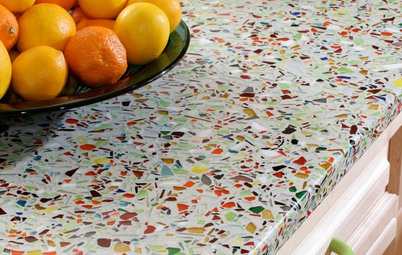
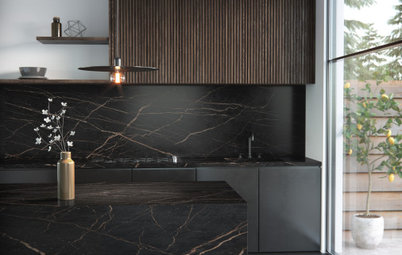
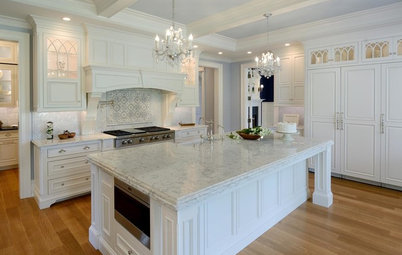
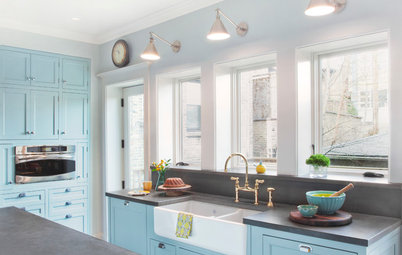
Engineered quartz is the style chameleon of countertops. Whether you love modern or traditional, apple green or ecru, honed or polished, flecked or patterned, quartz’s myriad options will have you covered. Engineered quartz is also easy to maintain, nontoxic and nonallergenic — there’s not much to dislike about this stunning man-made material.
Pros: Engineered quartz has many bragging rights. Thanks to the quartz content, it’s tough like granite, and the resin makes the material malleable and impact resistant. Both materials offer stout durability. Engineered quartz is also nonporous, making it resistant to stains and scratches. And this material has a leg up on natural stone when it comes to large installations: Because it can flex, engineered quartz can be fabricated in larger pieces and with fewer joints.
Cons: Most quartz products claim to be heat-resistant, but that doesn’t mean they’re completely heat proof. As with many countertop materials, it’s always best to check with the manufacturer about just how much heat the product is able to withstand.
Designers share more pros and cons of engineered quartz
Cons: Most quartz products claim to be heat-resistant, but that doesn’t mean they’re completely heat proof. As with many countertop materials, it’s always best to check with the manufacturer about just how much heat the product is able to withstand.
Designers share more pros and cons of engineered quartz
Contemporary Vanity Tops And Side Splashes
Ecofriendliness: Quartz countertops are great for indoor air quality, as they emit few VOCs (volatile organic compounds) and are nontoxic and nonallergenic for humans. For these reasons, many quartz countertop products are certified by the GreenGuard Environmental Institute, an independent agency that verifies claims of low chemical emissions.
Quartz gets the green thumbs-up too for being a durable counter that can last a lifetime, and because several manufacturers offer products with recycled content.
Quartz's eco downsides are that the resins used are petroleum based, and that most companies mine or manufacture their product outside the U.S., which increases transportation-related energy expenditures for U.S. clients. Only Cambria both mines and manufactures its quartz countertops entirely within the U.S.
Quartz gets the green thumbs-up too for being a durable counter that can last a lifetime, and because several manufacturers offer products with recycled content.
Quartz's eco downsides are that the resins used are petroleum based, and that most companies mine or manufacture their product outside the U.S., which increases transportation-related energy expenditures for U.S. clients. Only Cambria both mines and manufactures its quartz countertops entirely within the U.S.
Special considerations: Honed finishes, especially dark colors, show more fingerprints.
Maintenance: The surface requires no sealants or waxes (either initially or for ongoing upkeep). Routine cleanup is a breeze with soap and water.
More guides to kitchen counters
Maintenance: The surface requires no sealants or waxes (either initially or for ongoing upkeep). Routine cleanup is a breeze with soap and water.
More guides to kitchen counters
Cost: A typical engineered quartz countertop costs $95 to $105 per square foot installed.