





Combining Living & Dining Areas: 6 Tips for a Seamless Transition
Let the design elements of the living and dining area flow into each space and give a cohesive look to the overall decor

Pooja Khanna Tyagi
12 November 2019
Houzz India Contributor. An Architect , Interior Designer, Valuer, a Marathon Runner, and love Writing Poetry and Creative Stories on Building Design. Have been practicing since the year 2000 with specialization in the field of Corporate Interiors with projects extensively published in journals of national repute. Recently honoured with the reputed A3 Foundation award for Journalism for the year 2016 an for architectural poetry in the year 2018. Currently practicing and residing in Delhi and Noida.
Website: www.khannaenterprise.com, Email: poojakhanna224@gmail.com, M:9891993392
Houzz India Contributor. An Architect , Interior Designer, Valuer, a Marathon Runner,... More
A combined living-cum-dining area has become an integral part of compact homes, studio apartments and open-plan-design homes. This type of layout not only serves two distinct functions but also gives the home a more spacious look that ensures minimum wastage of space. Therefore, it is essential to skilfully integrate the decor of the living and dining areas to give it a cohesive look. Here are tips to get you going.
1. Match the furniture and upholstery
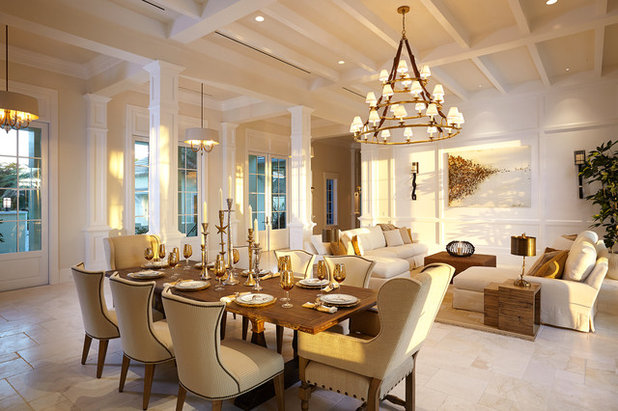
Use a similar style of furniture for the sofas as well as the dining chairs. Upholster the furniture with the same fabric so that it matches and visually connects the living and dining areas.
Open-Plan Design Blunders & How to Avoid Them
Use a similar style of furniture for the sofas as well as the dining chairs. Upholster the furniture with the same fabric so that it matches and visually connects the living and dining areas.
Open-Plan Design Blunders & How to Avoid Them
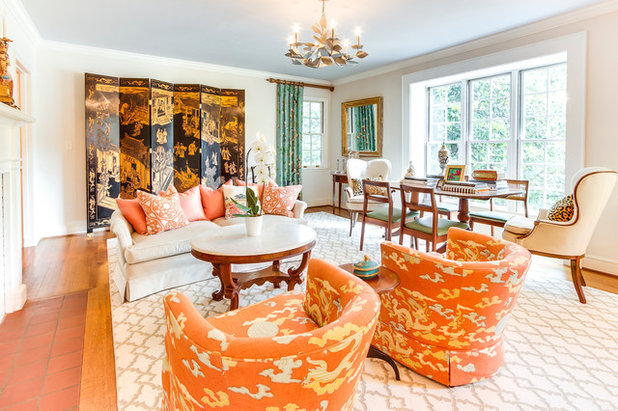
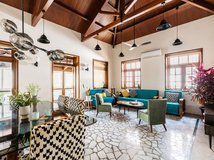
You can also mix and match the upholstery, like in this picture. The overall colour palette of this space includes shades of orange, off-white and green. These colours have been cleverly introduced in a harmonious mix on the sofas, arm chairs, dining chairs, cushions, curtains and rug, to bring in a sense of continuity between the living and dining areas.
Find an interior designer among Houzz professionals
Find an interior designer among Houzz professionals
2. Introduce area rugs
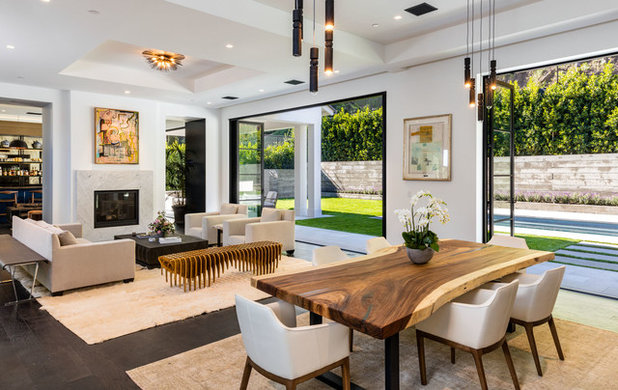
One of the most practical ways to link the living and dining spaces is by using carpets or area rugs. As you see in this picture, an area rug is used to define the living area and a similar rug is introduced below the dining table to bring the spaces together while defining them separately.
Look at living rooms in Houzz photos
One of the most practical ways to link the living and dining spaces is by using carpets or area rugs. As you see in this picture, an area rug is used to define the living area and a similar rug is introduced below the dining table to bring the spaces together while defining them separately.
Look at living rooms in Houzz photos
3. Consider an L-shaped sofa
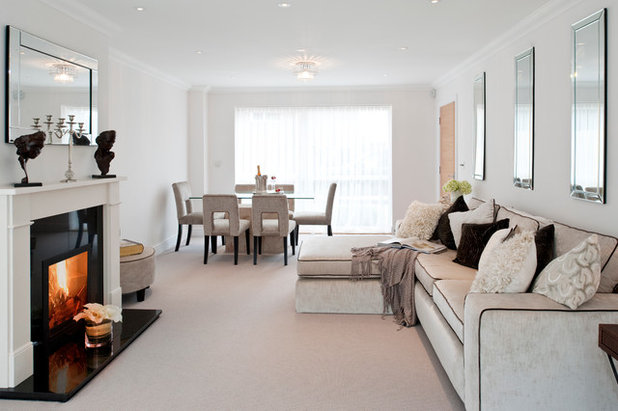
In a compact space, introduce an L-shaped sofa to zone out the seating area and to create an interactive conversation area with the dining space. This can be done by placing the L-shaped sofa along one wall and the position the dining table along the opposite wall, as in this example, so the living area seamlessly flows into the dining space.
Find an L-shaped sofa in Houzz products
In a compact space, introduce an L-shaped sofa to zone out the seating area and to create an interactive conversation area with the dining space. This can be done by placing the L-shaped sofa along one wall and the position the dining table along the opposite wall, as in this example, so the living area seamlessly flows into the dining space.
Find an L-shaped sofa in Houzz products
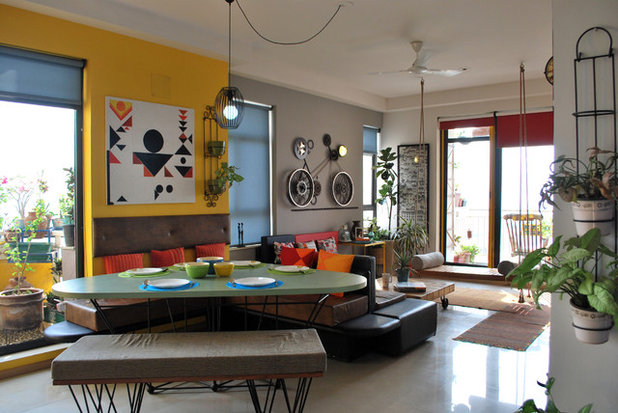
Here, in this example, two L-shaped sofas are placed back to back, where one L-shaped sofa serves as the living area while the other L-shaped sofa combines with a triangular dining table – with softly rounded corners – to function as the
dining space. Pops of colour on the throw pillows and the walls make the space feel more lively.
dining space. Pops of colour on the throw pillows and the walls make the space feel more lively.
4. Introduce a wall accent
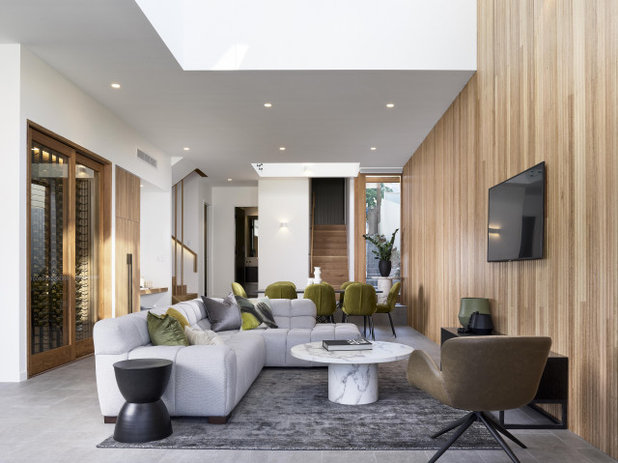
Unite the living and dining areas with an accent wall that runs through both these areas. In this example, one wall is clad in a wooden panelling; it creates visual interest and ties both these areas together.
Unite the living and dining areas with an accent wall that runs through both these areas. In this example, one wall is clad in a wooden panelling; it creates visual interest and ties both these areas together.
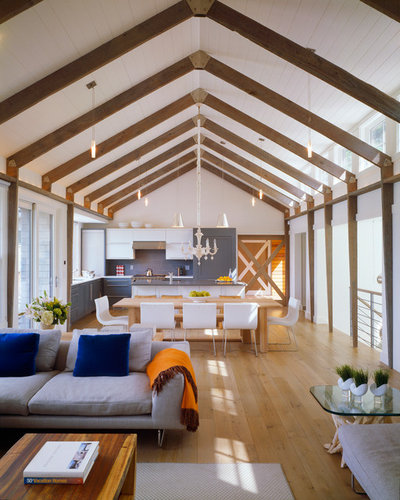
5. Integrate the decor with a similar flooring and ceiling
Connect the living and dining areas with similar flooring and uniform ceiling design, which run through both these areas. In this example, the wooden flooring and the bold ceiling design take centre stage and bring the space visually together.
Connect the living and dining areas with similar flooring and uniform ceiling design, which run through both these areas. In this example, the wooden flooring and the bold ceiling design take centre stage and bring the space visually together.
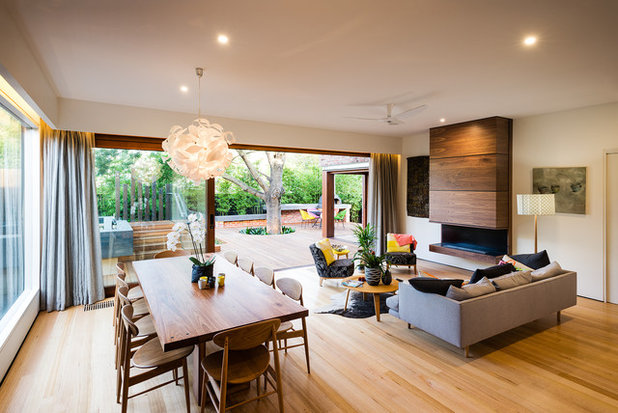
The flat ceiling and wooden flooring run through this living and dining area, uniting the space to give it a neat look.
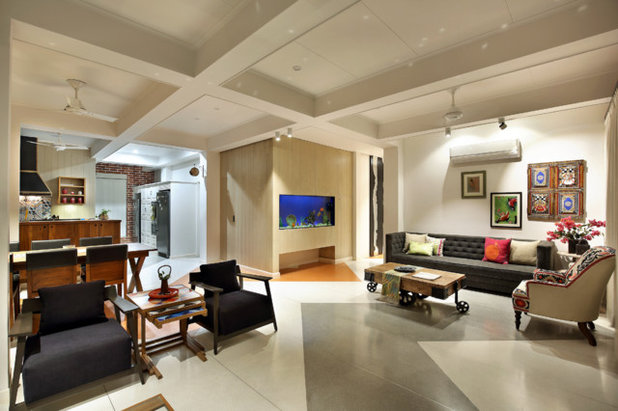
Here’s a twist in the flooring design. Although a uniform ceiling design and off-white base tiles run through this living and dining combo, dynamic floor patterns in shades of grey and orange are introduced to aesthetically reinforce the visual connection.
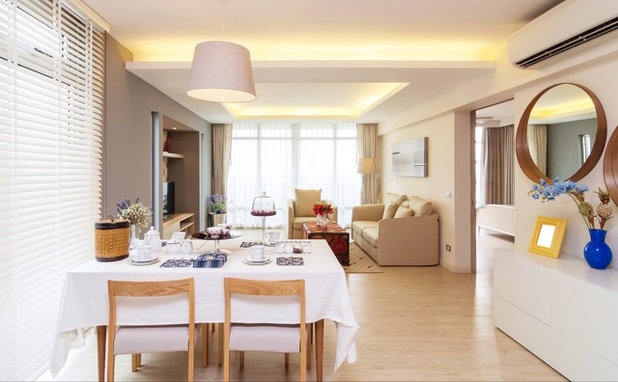
6. Use a similar colour palette
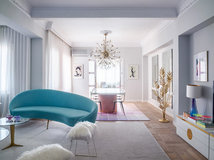
Let the living and dining area share a similar colour palette. In this picture, the neutral colour tones of white and beige flow through the living-cum-dining area and make the space feel more open and airy. The accent wall and the diffused ceiling lighting add further depth to the space.
Tip: Alternatively, choose a monochromatic colour scheme for the living and dining space.
Read more:
Remarkable Pairings: 40 Gorgeous Living Dining Combos
How to Partition the Living Room From the Dining Area
Tell us:
Is there any other way to aesthetically combine the living and dining areas? Let us know in Comments below.
Let the living and dining area share a similar colour palette. In this picture, the neutral colour tones of white and beige flow through the living-cum-dining area and make the space feel more open and airy. The accent wall and the diffused ceiling lighting add further depth to the space.
Tip: Alternatively, choose a monochromatic colour scheme for the living and dining space.
Read more:
Remarkable Pairings: 40 Gorgeous Living Dining Combos
How to Partition the Living Room From the Dining Area
Tell us:
Is there any other way to aesthetically combine the living and dining areas? Let us know in Comments below.
What are you working on?
Related Stories
Photo Books
30 Best Sofa Designs
This guide gives a rundown of sofa types that will leave you spoilt for choices
Full Story
Decorating Ideas
How to Make Your Living Room Look Bigger
By Neila Deen
Decorating a small living room? These 10 tips will help you make it more beautiful and welcoming
Full Story
Decorating Ideas
12 Sofa Colour Combinations You Can Blindly Trust
We've put together a tasteful mix of sofa shades that can take your living room from meh to magnificent
Full Story
Indian Homes
Design-Forward Indian Living Rooms, Bedrooms & Kitchens on Houzz
Take cues, ideas and inspiration from this compilation of 50 inspiring Indian spaces
Full Story
Most Popular
Which False Ceiling Material is Better: Gypsum or POP?
Here is all you need to know about the difference between gypsum and POP before you commit to a ceiling
Full Story
Small Spaces
9 Seating Arrangement Ideas for Small Living Rooms
Discover ways to live large with these pocket-sized living areas
Full Story
Colour Guides
5 Best Colours for Small Living Rooms
These paint colours will set the mood, update your space and make a small space seem larger than it is
Full Story
Dining Rooms
Remarkable Pairings: 40 Gorgeous Living Dining Combos
Here are inspiring living and dining room ideas for small and big spaces
Full Story
Decorating Guides
Contemporary Chic: How to Design a Modern Rustic Living Room
Love natural, rustic style, but want to keep it contemporary? Take a look at these design ideas
Full Story
Colour Guides
What Colour Curtains Go With Cream Walls?
Here are exciting and surprising curtain colours that match cream walls
Full Story
all designs are excellent. 5th one (wooden beams to the roof) is brilliant and aesthetic bringing old charm and contemporary looks together.