





8 Vernacular Design Elements We Love
These Indian architectural elements have weathered the onslaught of Modernism and emerged as timeless favourites

Meghna Mehta
7 April 2017
House India Contributor. An architect by education and a journalist by passion, I chose to pursue a cross-road between the two. After completing my post graduation from CEPT University, I am currently sub-editor at a leading architecture magazine and implementing my keen interests towards research, theory and its manifestations in the field of design.
House India Contributor. An architect by education and a journalist by passion, I... More
India has a long history of varied cultures, traditions, languages, rulers and religions. This has resulted in a multitude of architectural ideas, influences and styles (most of them centuries old) that have evolved from different parts of the country. Here are some common intersections of a few of those diverse ideas, and how they have found a space and are making an impact even in modern homes.
1. Courtyards for interior spaces
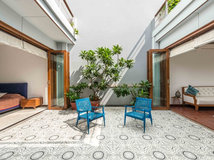
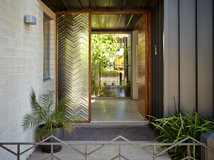
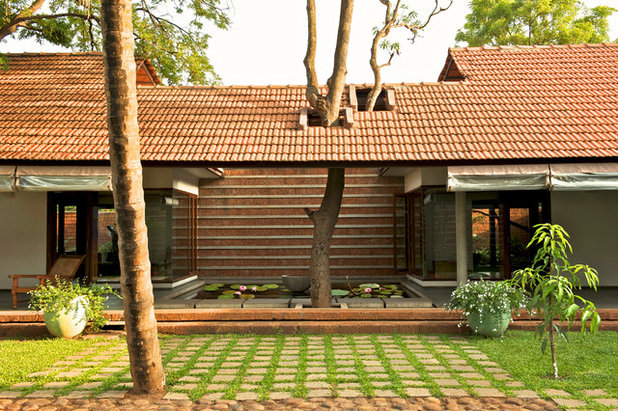
Indian houses in different parts of the country have adopted courtyards as a way to respond to the climate of the region. In Gujarat’s Pol houses, Maharashtra’s Wadas and Kerala’s Nalukettu houses, this traditional element works wonders to escape the summer heat: convection draws warm air out of the rooms around the courtyard, and they are sheltered from the hot summer wind called loo. In winter they are places to bask in the winter sun, sheltered from cold winds. Here, you can see how Khosla Associates have created a beautiful semi-open courtyard as a soothing buffer space within the house.
Indian houses in different parts of the country have adopted courtyards as a way to respond to the climate of the region. In Gujarat’s Pol houses, Maharashtra’s Wadas and Kerala’s Nalukettu houses, this traditional element works wonders to escape the summer heat: convection draws warm air out of the rooms around the courtyard, and they are sheltered from the hot summer wind called loo. In winter they are places to bask in the winter sun, sheltered from cold winds. Here, you can see how Khosla Associates have created a beautiful semi-open courtyard as a soothing buffer space within the house.
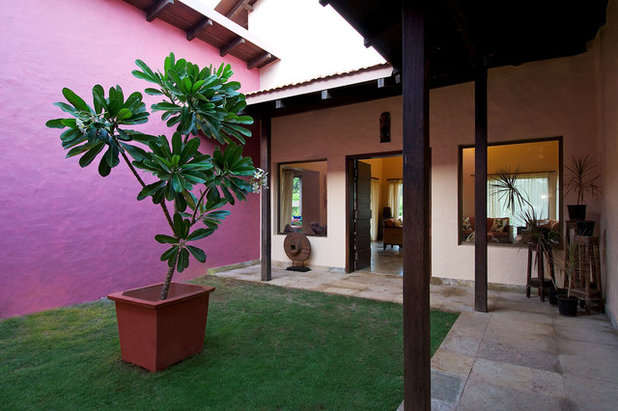
They are also great spaces to socialise, bring the family together and to connect with nature.
2. Pitched roofs with verandahs
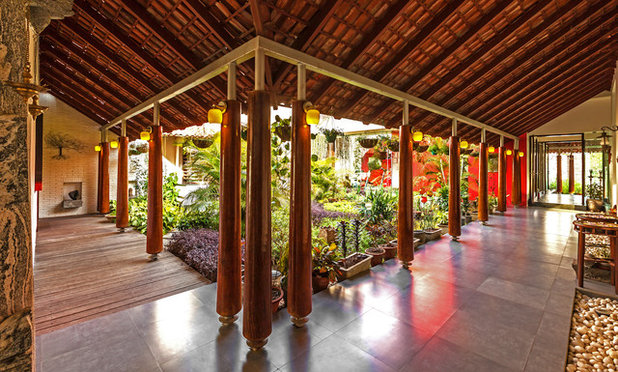
Pitched (slanted) roofs covered with Mangalore tiles of red baked clay are a common sight in Indian towns and villages. The reasons for their popularity are simple: the tiles are easily available, they are an appropriate response to the climate and their design uses traditional techniques of execution so they are easy to make. As seen here in this house by Kumar Moorthy & Associates, such roofs are not only suitable for heavy rains but provide a good height to the interior spaces as an added advantage.
Take a tour of this house
Pitched (slanted) roofs covered with Mangalore tiles of red baked clay are a common sight in Indian towns and villages. The reasons for their popularity are simple: the tiles are easily available, they are an appropriate response to the climate and their design uses traditional techniques of execution so they are easy to make. As seen here in this house by Kumar Moorthy & Associates, such roofs are not only suitable for heavy rains but provide a good height to the interior spaces as an added advantage.
Take a tour of this house
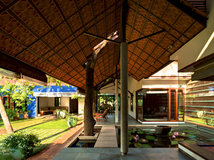
This kind of roof, coupled with a verandah, is a physical expression of the traditional warm and welcoming culture of India. A verandah is an intermediate space that opens the home to the outside world. This idea aligns with the Hindu code of conduct of being hospitable to guests. It comes from a Sanskrit saying ‘Atithi Devo Bhava’ which means ‘Guests are like gods’, and is widely practised even today.
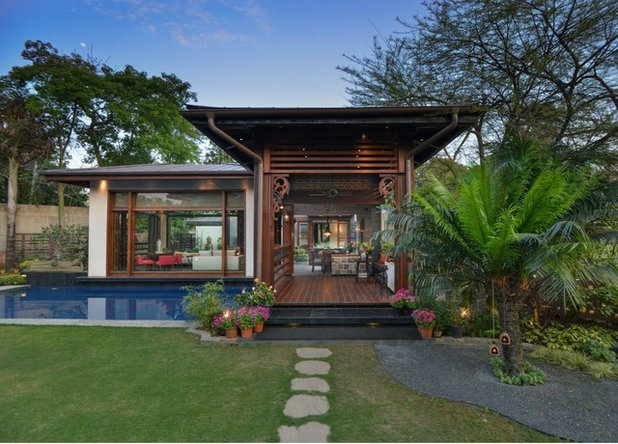
Designed by Monica Khanna Designs, this verandah in a Delhi farm house is integrated with a cooling water body.
Designed by Monica Khanna Designs, this verandah in a Delhi farm house is integrated with a cooling water body.
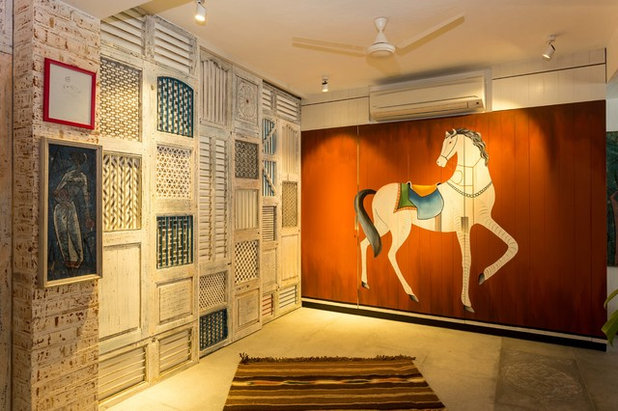
3. Pictorial motif references
In India, we often tweak historical references to bring them into our contemporary homes and complement their largely modern ambience. In this Mumbai apartment by The Orange Lane, a representation of a horse, in a style usually seen in Mughal paintings, has been adapted to a present-day application.
In India, we often tweak historical references to bring them into our contemporary homes and complement their largely modern ambience. In this Mumbai apartment by The Orange Lane, a representation of a horse, in a style usually seen in Mughal paintings, has been adapted to a present-day application.
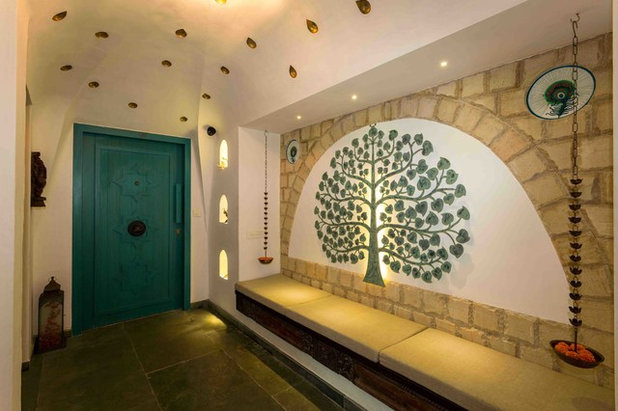
India is the land where the Buddha attained enlightenment. In this image, a reference to the Bodhi Tree at the entrance of the house is a throwback to Indian roots. The hanging diyas (lamps) and the curved ceiling typical of village houses, bring in a rural architectural touch.
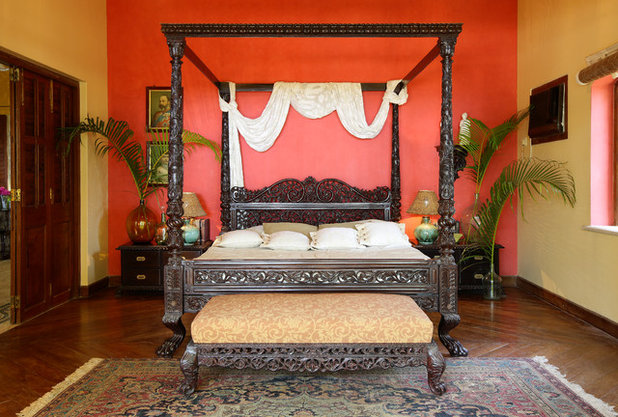
4. Richly carved wooden furniture
Wooden furniture, painstakingly and profusely carved with exquisite artistry, shouts vernacular Indian style. Intricate carvings in wood and marble were symbolic of prosperity in the olden days. As these were mainly seen in the palaces and forts of kings and queens, others aspired to display this ‘royal’ design element in their homes. It is not uncommon to find many traditional homes with beautifully carved window- and door-frames even today.
The four-poster bed designed by The Raj Company with carved posts and legs is reminiscent of the furniture found in palaces of Rajasthan and alludes to a bygone time.
Wooden furniture, painstakingly and profusely carved with exquisite artistry, shouts vernacular Indian style. Intricate carvings in wood and marble were symbolic of prosperity in the olden days. As these were mainly seen in the palaces and forts of kings and queens, others aspired to display this ‘royal’ design element in their homes. It is not uncommon to find many traditional homes with beautifully carved window- and door-frames even today.
The four-poster bed designed by The Raj Company with carved posts and legs is reminiscent of the furniture found in palaces of Rajasthan and alludes to a bygone time.
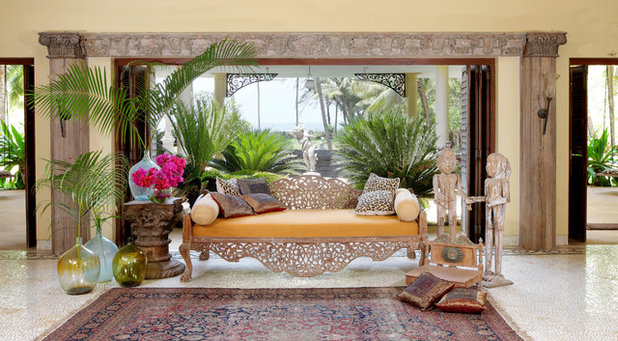
A traditional Indian living room setup typically has a long cushioned diwan (day bed) with bolsters on the sides surrounded by several cushions in colourful Indian fabrics. Teamed with beautifully carved stone or wooden furniture, this can be in the form of a low seating with or without a backrest. A diwan is a sturdy piece of furniture and can easily last upto 15 to 20 years. This is often used with an Indian or a Persian carpet.
5. Jharokha-style balconies
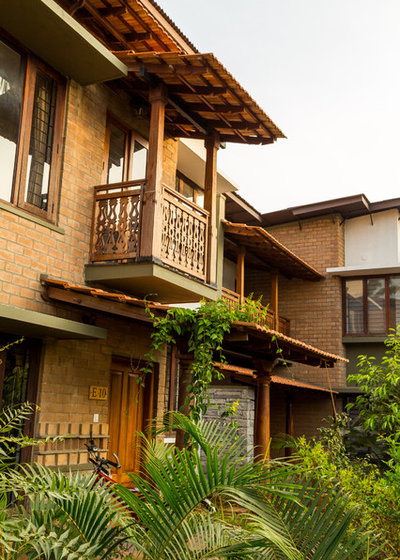
This element is a form of balcony, known as a jharokha, which literally means skylight. It is a small overhanging balcony, enclosed by intricately carved screens of wood or stone. Traditionally jharokas were used in palaces by ladies of the court to keep an eye on the day’s proceedings without themselves being seen. This balcony has found many current adaptations across India in various materials like wood, marble, brick and concrete . As seen in this project by GoodEarth, this balcony has solid wooden posts as supports and a carved wooden railing.
This element is a form of balcony, known as a jharokha, which literally means skylight. It is a small overhanging balcony, enclosed by intricately carved screens of wood or stone. Traditionally jharokas were used in palaces by ladies of the court to keep an eye on the day’s proceedings without themselves being seen. This balcony has found many current adaptations across India in various materials like wood, marble, brick and concrete . As seen in this project by GoodEarth, this balcony has solid wooden posts as supports and a carved wooden railing.
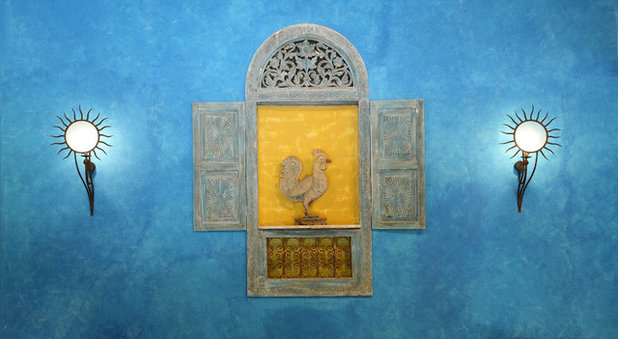
Adaptations of the jharokha are used as aesthetic idea that refers back to the romance and history associated with it. They add an Indian appeal to contemporary decor. As seen here, a false window with a relief statue of a hen perched in it gives the wall a quirky traditional context.
6. Intricate jaali patterns
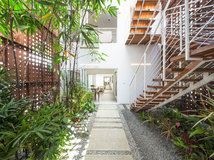
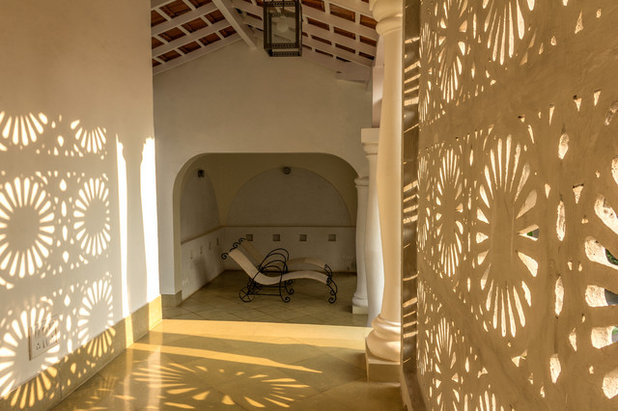
Jaalis are intricately carved cut-out patterns in walls or windows. They have been used in Indian architecture since bygone times. They filter light and wind into the interiors, creating beautiful patterns modulating light and air through the day. In this house, the jaali opens up into a courtyard, allowing cool breezes into the house while shielding the interior from view.
Jaalis are intricately carved cut-out patterns in walls or windows. They have been used in Indian architecture since bygone times. They filter light and wind into the interiors, creating beautiful patterns modulating light and air through the day. In this house, the jaali opens up into a courtyard, allowing cool breezes into the house while shielding the interior from view.
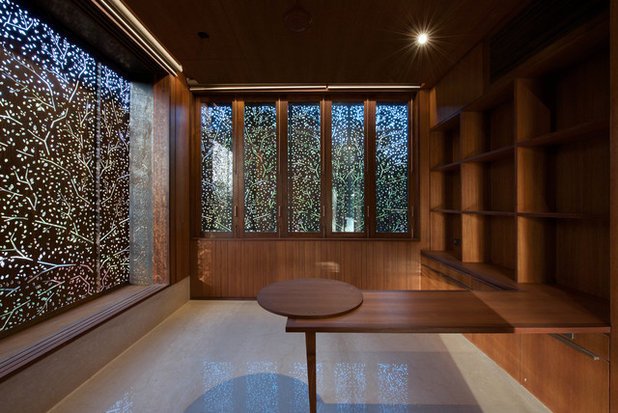
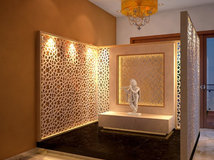
The applications have evolved through time but jaalis continue to create mesmerising experiences of light and shadow. Another such example can be seen in this very contemporary house by SPASM.
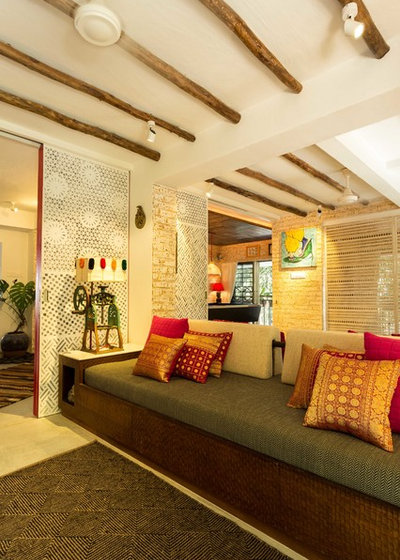
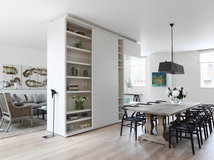
Jaalis are also used as partitions and are being used increasingly in homes to subtly divide spaces, as in this picture. On the right, you can see a similar divide made by an intricately woven curtain.
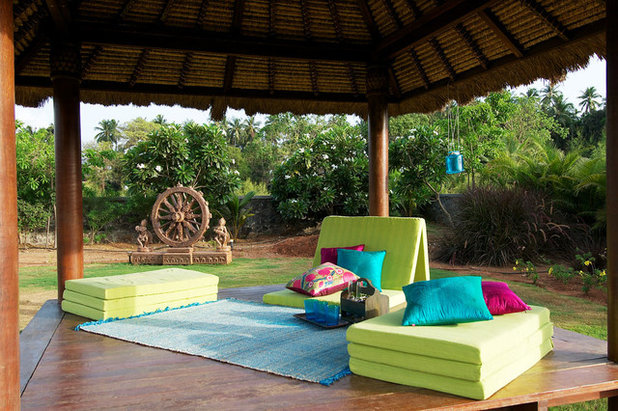
7. Sculptures with context
Set in a landscaped area with a thatched-roof gazebo, The Ashleys have placed a traditional stone sculpture of the Ashoka Chakra (featured on many of the stone-carved edicts of Emperor Ashoka, and part of the Indian flag) bringing an immediate Indian context to the outdoor space.
Set in a landscaped area with a thatched-roof gazebo, The Ashleys have placed a traditional stone sculpture of the Ashoka Chakra (featured on many of the stone-carved edicts of Emperor Ashoka, and part of the Indian flag) bringing an immediate Indian context to the outdoor space.
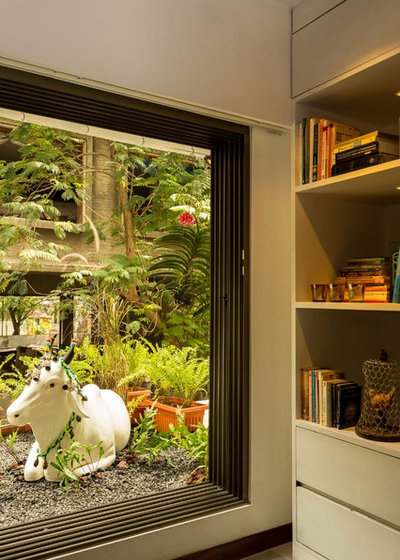
In India, where the cow is worshipped by Hindus, many houses in rural India have a cow of their own. In this city home designed by The Orange Lane, a charming reference has been made with the sculpture of a cow sitting in the building compound.
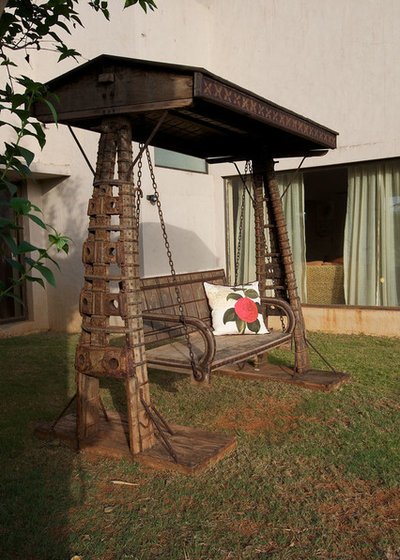
8. Jhoolas, the comfort swings
Most Indian houses in towns and villages had a jhoola (swing) in their front or backyards, and this can be seen even today in many Indian rural homes. Traditionally, a swing was just a slab of wood suspended by ropes from the bough of a tree but times have changed, and now they come in different designs with different finishes to suit modern homes. Typically seen in living rooms and balconies as a part of a seating setup, they are a much loved and used in shared common spaces.
Most Indian houses in towns and villages had a jhoola (swing) in their front or backyards, and this can be seen even today in many Indian rural homes. Traditionally, a swing was just a slab of wood suspended by ropes from the bough of a tree but times have changed, and now they come in different designs with different finishes to suit modern homes. Typically seen in living rooms and balconies as a part of a seating setup, they are a much loved and used in shared common spaces.
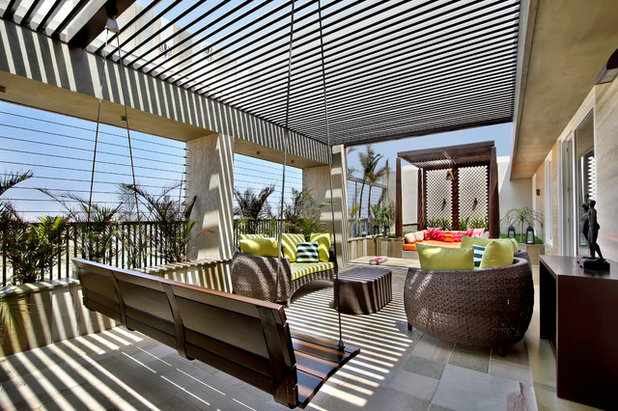
Dipen Gada and Associates bring in the jhoola as a part of the seating on the terrace. Traditional in detail, modern in its overall outlook.
Read more:
How to Add a Jhoola (Swing) in Your Home
Houzz Tour: An Ahmedabad House With an Inside-Outside Connection
Tell us:
Which of these Indian elements would you like to adopt in your home? Share in Comments below.
Read more:
How to Add a Jhoola (Swing) in Your Home
Houzz Tour: An Ahmedabad House With an Inside-Outside Connection
Tell us:
Which of these Indian elements would you like to adopt in your home? Share in Comments below.
What are you working on?

Related Stories
Working with professionals
How to Find an Architect That's Right for You
Make the construction and renovation of your home a pleasant and memorable journey by selecting the right architect
Full Story
Indian Homes
11 Indian Homes That Revolve Around Courtyards
Take inspiration from these homes that make a solid case for courtyards in urban life
Full Story
Decorating Guides
Building Secrets to a Cool, Breezy Home for Hot Indian Summers
Get updated on climate-responsive design strategies for a home that stays naturally cool all year round
Full Story
Working with professionals
What's the Difference Between an Architect and a Civil Engineer?
We clear up the confusion between the professional roles and scope of work of an architect and a civil engineer
Full Story
Architecture
These Indian Homes Know How To Combat Harsh Climate
See how these homes by SPASM, Kumar Moorthy & Associates and JPLUSDARCHITECTS mitigate the ramifications of harsh climate ahead of time
Full Story
Decorating Guides
What Are the Biggest Challenges in Renovating an Old House?
Here are some common problems which may arise during the renovation of an old property
Full Story
Indian Homes
How to Beat the Summer Heat by Keeping the Roof Cool
Here are ways to cope with the high summer temperatures that heat the roof and the top floors of residential buildings
Full Story
Decorating Guides
How to Design a Home That is Not a Burden on the Environment
Incorporate smart details with simple lifestyle changes to create a home that is kind to the planet
Full Story
Architecture
What Is Kerala Architecture?
Let's explore what design elements constitute traditional Kerala house architecture
Full Story
Architecture
Expert Speak: What Are the Best Materials for Home Elevations?
Houzz checks in with an expert about the the most sturdy and adaptable materials for home facades
Full Story
Love to see a culture brought into the architecture and furnishings.
I always liked the idea of a courtyard. Totally impractical in our climate of course :( Would be full of snow.
I love the way you are mixing vernacular and contemporary. It feels good that the lost traditions are encouraged.