
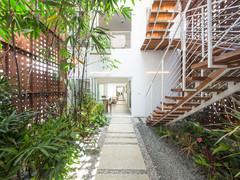
4 Architecture Styles That Find Harmony With Nature
See how these earth-friendly, sustainable design approaches coexist with nature

“Study nature, love nature, stay close to nature. It will never fail you.” — Frank Lloyd Wright
Homeowners and designers continue to be inspired to design houses that are more “earth-friendly.” Our approach often focuses on energy efficiency, as we use enhanced insulating materials and install advanced heating and cooling systems. We add solar panels to rooftops and build wind farms to generate electricity.
Sustainable design can also celebrate natural beauty. Let’s explore some approaches to designing houses that wear their sustainable features in harmony with the architecture and broader landscape.
Homeowners and designers continue to be inspired to design houses that are more “earth-friendly.” Our approach often focuses on energy efficiency, as we use enhanced insulating materials and install advanced heating and cooling systems. We add solar panels to rooftops and build wind farms to generate electricity.
Sustainable design can also celebrate natural beauty. Let’s explore some approaches to designing houses that wear their sustainable features in harmony with the architecture and broader landscape.
1. Vernacular architecture: Looking to the past to innovate in the present
Taking cues from traditional building forms can be a good starting point for sustainable design. Buildings in earlier times were designed without modern heating and cooling systems. Designers and builders used natural ventilation in hot months and solar heat gain in cold months to respond to the local climate in the layout and details of their houses.
A vernacular farmhouse, like this more than 100-year-old one in Adelaide, Australia, with a long and low metal gable roof, fits in well with the landscape.
Lessons From Vernacular Architecture That Apply Even Today
Taking cues from traditional building forms can be a good starting point for sustainable design. Buildings in earlier times were designed without modern heating and cooling systems. Designers and builders used natural ventilation in hot months and solar heat gain in cold months to respond to the local climate in the layout and details of their houses.
A vernacular farmhouse, like this more than 100-year-old one in Adelaide, Australia, with a long and low metal gable roof, fits in well with the landscape.
Lessons From Vernacular Architecture That Apply Even Today
Glenn Murcutt, renowned Australian architect and Pritzker Prize winner, looked to traditional Australian farm buildings, with their simple rectangular forms and gable roofs, for inspiration when designing the Fredericks-White House, shown here, in New South Wales.
The one-story house features a partial loft area, with a low profile that doesn’t detract from the gentle contours of the surrounding land. The home’s long, narrow footprint also allows cooling breezes to flow through its narrow section.
Find an architect from the Houzz professional directory to build your home
The one-story house features a partial loft area, with a low profile that doesn’t detract from the gentle contours of the surrounding land. The home’s long, narrow footprint also allows cooling breezes to flow through its narrow section.
Find an architect from the Houzz professional directory to build your home
Unfinished wood siding and a corrugated metal roof fit in with the agrarian buildings typical of the landscape. These materials are also inexpensive, durable and readily available locally.
A magnificent chimney was all that was left of a previous farmhouse on the site. Murcutt insisted on keeping it as a focal point of the entry, providing a daily reminder of the agrarian history of the property.
A magnificent chimney was all that was left of a previous farmhouse on the site. Murcutt insisted on keeping it as a focal point of the entry, providing a daily reminder of the agrarian history of the property.
Murcutt integrated an open-air veranda into the centre, making for a great place to relax on a hot evening. The vented roof design allows natural convection to pull the warm, stale air out of the house. On extra-hot evenings, this space also serves as a sleeping porch.
Murcutt describes the exterior skin of this house as being like clothing: It can be changed as weather and seasons change. The exterior wall has three adjustable layers: separate sliding panels of glass, adjustable louvers and wood. Exterior walls of wooden screen and glass panels slide open and the louvers over the skylight can be adjusted.
The windows and skylights are also fitted with reflective aluminium louvers to deflect the sun’s heat during the hot season.
The windows and skylights are also fitted with reflective aluminium louvers to deflect the sun’s heat during the hot season.
Plan and cutaway diagram of the Fredericks-White House. The narrow, long footprint allows natural breezes to cool the house. The peak of the roof is vented to pull warm air out of the house.
Murcutt elevated this simple building with an exquisitely detailed post-and-beam structural system using local timbers.
Murcutt elevated this simple building with an exquisitely detailed post-and-beam structural system using local timbers.
2. Earth architecture: Nestling into the land and out of view
Another approach to fitting into the landscape is to nest the building into the ground, an approach used by practitioners of “earth” or “organic” architecture. The home is partially hidden by earth berms or is built partially underground. This allows the house to have minimal visual impact, particularly helpful in open prairie-like environments. Setting the house into the land allows the interior to maintain a more consistent air temperature, making it more efficient – and sustainable – to heat and cool the house.
The cliff dwellings of Mesa Verde in the southwest United States are a historic example of earth architecture. The Native Americans built their dwellings into a south-facing cliff. The north side of the dwellings are sheltered and insulated by the ground, and the south side opens to the sun. This is an ideal orientation for solar gain.
Luigi Rosselli Architects built this example of earth architecture on a flat site in Western Australia by berming the earth on the rear, allowing 12 apartment units to almost disappear.
Read more about this innovative design
Another approach to fitting into the landscape is to nest the building into the ground, an approach used by practitioners of “earth” or “organic” architecture. The home is partially hidden by earth berms or is built partially underground. This allows the house to have minimal visual impact, particularly helpful in open prairie-like environments. Setting the house into the land allows the interior to maintain a more consistent air temperature, making it more efficient – and sustainable – to heat and cool the house.
The cliff dwellings of Mesa Verde in the southwest United States are a historic example of earth architecture. The Native Americans built their dwellings into a south-facing cliff. The north side of the dwellings are sheltered and insulated by the ground, and the south side opens to the sun. This is an ideal orientation for solar gain.
Luigi Rosselli Architects built this example of earth architecture on a flat site in Western Australia by berming the earth on the rear, allowing 12 apartment units to almost disappear.
Read more about this innovative design
This house outside of Sydney by architect Peter Stutchbury is carved into this steeply sloped site. From above, all we see is the green roof. Native grasses require little watering and care, and they provide insulation for the structure below. A low wall surrounding the garden protects from falls.
3. Sky architecture: Touching the ground lightly
Sky architecture takes a very different approach than the previous example, by placing the home on poles. This is also referred to as a column-and-pier structural system, and it gives this house, the Simpson-Lee house in Sydney, the appearance of floating over the ground. This is particularly effective in a forest setting, where the home’s support poles can emulate the pattern of tree trunks. With the house supported by poles, the natural slope of the land can remain undisturbed and cooling breezes can flow under the building.
Another environmental benefit of this structural system is that it eliminates the need for continuous concrete spread footings and foundation walls in most houses. Extensive machine excavation and the energy-intensive use of concrete is no longer needed. The natural grade remains undisturbed, allowing the natural drainage of the land to continue. The piers that support the columns can be hand-dug to avoid disturbing the roots of existing plants.
The Simpson-Lee House, also by Murcutt, sits on structural poles. Sliding doors along the front open to natural forest. The canopy of trees provides a filtered light that changes throughout the day. Pole supports become an important design element in the interior of the house as well.
Sky architecture takes a very different approach than the previous example, by placing the home on poles. This is also referred to as a column-and-pier structural system, and it gives this house, the Simpson-Lee house in Sydney, the appearance of floating over the ground. This is particularly effective in a forest setting, where the home’s support poles can emulate the pattern of tree trunks. With the house supported by poles, the natural slope of the land can remain undisturbed and cooling breezes can flow under the building.
Another environmental benefit of this structural system is that it eliminates the need for continuous concrete spread footings and foundation walls in most houses. Extensive machine excavation and the energy-intensive use of concrete is no longer needed. The natural grade remains undisturbed, allowing the natural drainage of the land to continue. The piers that support the columns can be hand-dug to avoid disturbing the roots of existing plants.
The Simpson-Lee House, also by Murcutt, sits on structural poles. Sliding doors along the front open to natural forest. The canopy of trees provides a filtered light that changes throughout the day. Pole supports become an important design element in the interior of the house as well.
These sketches of the Simpson-Lee house show how the house is supported on columns that require minimal foundations, leaving the natural slope of the land undisturbed.
Located on a sloping site, this home’s green roof almost disappears into the landscape.
4. Biophilic design: Connecting to nature through architecture
The term “biophilic design” sounds esoteric, but it simply refers to the intuitive idea that we can lead more healthy and productive lives when our homes connect us to nature. After all, only recently in human evolution have we started to spend the majority of our time indoors.
The term was recently conceived, but the concept goes back to the hanging gardens of Babylon, where myth holds that the gardens were built for Queen Amytis to be a representation of the lush green hills of her homeland.
In addition to bringing us closer to nature, biophilic design also touts many energy-saving principles, including natural lighting, natural ventilation and ground insulation.
4. Biophilic design: Connecting to nature through architecture
The term “biophilic design” sounds esoteric, but it simply refers to the intuitive idea that we can lead more healthy and productive lives when our homes connect us to nature. After all, only recently in human evolution have we started to spend the majority of our time indoors.
The term was recently conceived, but the concept goes back to the hanging gardens of Babylon, where myth holds that the gardens were built for Queen Amytis to be a representation of the lush green hills of her homeland.
In addition to bringing us closer to nature, biophilic design also touts many energy-saving principles, including natural lighting, natural ventilation and ground insulation.
Bring nature in. This can be accomplished by designing the house to be oriented around an internal courtyard garden, literally bringing nature into the home. Lush plants occupy the centre of the Ockens House, shown here, built by Murcutt in Sydney.
The presence of water near a home amplifies the perception of nature. In the Simpson-Lee house, the dappled light through the tree canopy reflects onto the ceiling from the surface of this reflecting pool.
This pool of water holds site water runoff and allows it to infiltrate slowly into the ground, instead of running off and causing erosion.
This pool of water holds site water runoff and allows it to infiltrate slowly into the ground, instead of running off and causing erosion.
Emulate nature. Designers can accomplish this by using natural materials like stone, wood, leather and wool. The house itself can also be designed to emulate a naturalistic shape, such as a shell, honeycomb shapes or columns that evoke the verticality of trees.
The entire interior of the Fredericks-White features wood-clad walls and cork on the floor.
Read more:
Houzz Forum: Is Vernacular Architecture Still Relevant?
9 Indian Homes That Celebrate Vernacular Architecture & Design
Tell us:
How do you live a more eco-friendly life at home? Share your tips in Comments.
The entire interior of the Fredericks-White features wood-clad walls and cork on the floor.
Read more:
Houzz Forum: Is Vernacular Architecture Still Relevant?
9 Indian Homes That Celebrate Vernacular Architecture & Design
Tell us:
How do you live a more eco-friendly life at home? Share your tips in Comments.
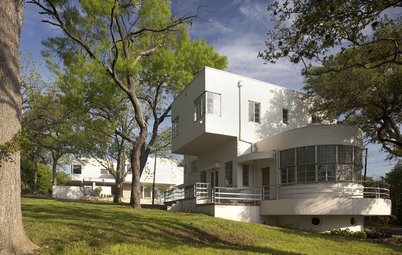
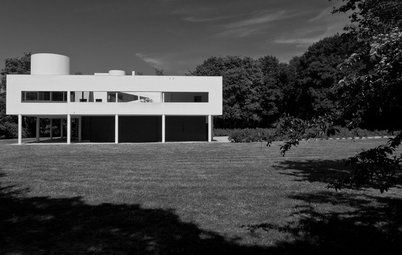
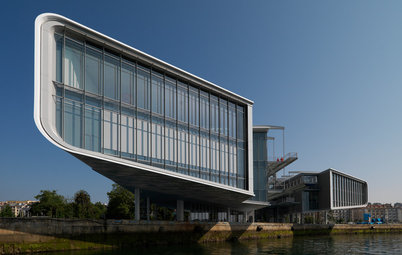



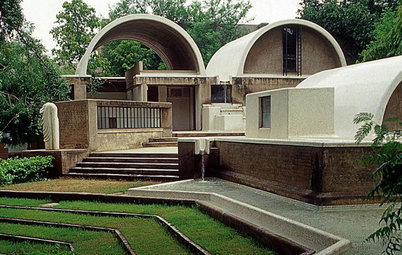
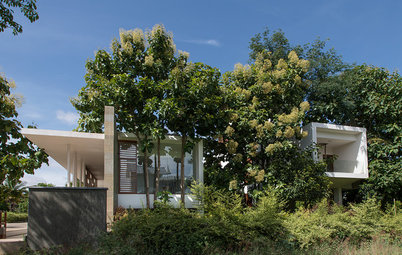

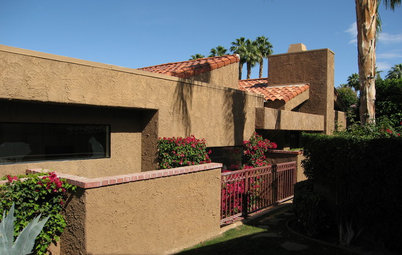
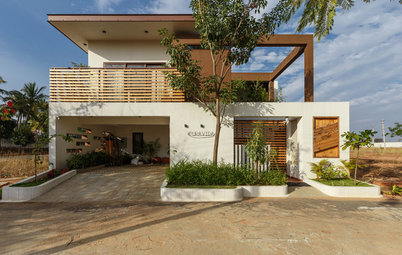
Designers face different challenges wherever they build. In cities, we design in the context of other neighbouring buildings. In rural areas, houses are seen in the context of their natural surroundings.
Homes outside of the city don’t have to stand out in or detract from the surrounding landscape. Their beauty can come from keeping a low profile and fitting in with the natural environment. This can also enhance our sense of well-being by visually connecting us to nature.